Amid Trademark and Copyright Disputes, Dewu Faces Long-Term Compliance Test in Fashion Intermediary Role
Dewu has encountered multiple trademark and portrait rights disputes, exposing its shortcomings in copyright and compliance governance as an intermediary, and facing a long-term compliance test.
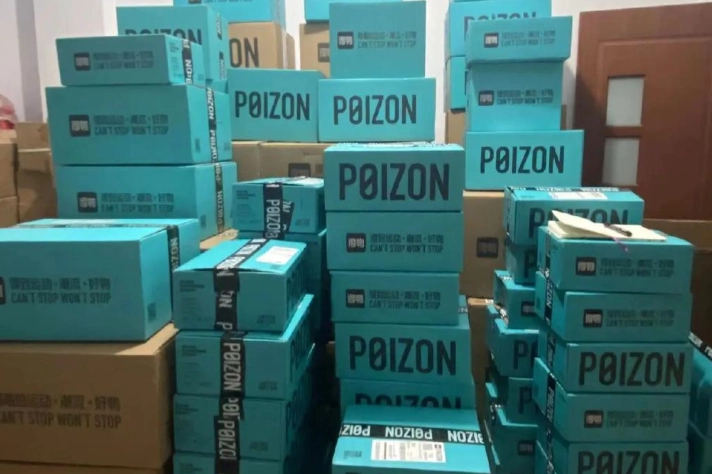
Beset by Disputes and Copyright Friction, Dewu Faces a Long-Term Compliance Test in the "Trend Intermediary" Arena
During a period when trend-focused e-commerce platforms have been surging ahead on the strength of tightly knit vertical communities and distinctive authentication systems, their control over compliance boundaries with upstream supply chains, third-party sellers, and marketing content has become the core question determining how far they can go. Recently, a string of judicial disputes has pushed Dewu, China's top trend-focused online shopping community, into the spotlight of copyright and rights governance.
These lawsuits, scattered across the enforcement layer of legal affairs, have thrust the platform—long bathed in the glow of young consumers' adoration—into the crosshairs of public opinion. A look through public corporate risk records from sources like Tianyancha at the platform's operating entity, Shanghai Dewu Information Group Co., Ltd., reveals a dense trail of litigation in its risk database. In most of these cases, Dewu finds itself in the passive role of defendant, with the causes of action deeply concentrated in highly targeted intellectual property areas such as trademark infringement disputes and portrait rights disputes.
Many industry observers, accustomed to decoding Dewu's model through marketing concepts like "authentic sneakers" or "authenticate before shipping," tend to dismiss these lawsuits as unavoidable "day-to-day friction" that comes with a platform's growth. That view clearly underestimates the structural compliance vulnerabilities Dewu faces as an intermediary platform in reshaping the trend e-commerce value chain.
Root Causes of the Underlying Disputes: Structural Compliance Vulnerabilities in a Multi-Party Matchmaking Business Ecosystem
To see through the root causes of the disputes behind these lawsuits, one must penetrate Dewu's core "multi-party matchmaking" business ecosystem. The company, founded in 2015 with a registered capital of 2 million RMB, has a business scope covering technical services, internet data services, and big data services. Although the registered capital revealed by Tianyancha is modest, its founder Yang Bing, together with affiliated partnerships and a communications group, has built atop it a super traffic hub with an annual GMV exceeding 100 billion RMB, connecting tens of thousands of third-party sellers with hundreds of millions of young consumers.
However, the "authenticate before shipping" intermediary model is a sharp blade that naturally dances on the edge of legal red lines. On the trademark infringement front, although Dewu repeatedly emphasizes its robust authenticity verification center, given the massive inventory volumes and the complex C2B2C (consumer-to-platform-to-consumer) flow mechanism, it is extremely difficult for the platform to achieve 100% interception of all potential issues, including secondary-market resale authorizations, design patents, and trademark conflicts for niche streetwear brands. When third-party merchants exploit platform loopholes to sell modified sneakers or products crossing legal lines with infringing elements, Dewu—as the entity providing data matchmaking and endorsement services—will inevitably be dragged into court as a defendant by brand rights holders.
On the portrait rights front, the situation bluntly exposes the aggressive tactics of its internal content marketing teams amid "breakout anxiety." As a trend community heavily reliant on KOL (opinion leader) outfit photos and celebrity looks to drive young consumers' purchasing desires, Dewu's day-to-day community posts, app pop-ups, and in-feed ads contain a large number of hidden infringement cases where celebrity or influencer portraits are used without authorization for commercial带货 purposes.
This short-sighted behavior of neglecting portrait ownership in marketing content to "ride waves of buzz and chase traffic" is now being ruthlessly turned back on its earlier operational dividends, one court summons at a time.
Warning and Outlook: Compliance Determines Longevity
In the current vertical e-commerce arena, platforms must not only face head-to-head price wars with traditional comprehensive e-commerce giants but also confront increasingly tightened red lines around internet copyright and personality rights protection. For Dewu, these recurring judicial disputes serve as a clear warning: a registered capital of 2 million RMB may carry a 100-billion-RMB GMV through a technological shell, but a company's safety margin ultimately depends on its sensitivity to underlying infringement risks. In the cycles ahead, whether that rigorous authentication eye shifts from "sneaker authenticity" to "its own compliance" will determine whether this trend giant can truly secure a lasting seat at the table.