Deli Group Halves Registered Capital, Puts Brakes on IoT Expansion Amid B2B Transition
Deli Group reduced the registered capital of its smart IoT subsidiary from 500 million yuan to 250 million yuan, scaling back B2B smart expansion to focus on core business.
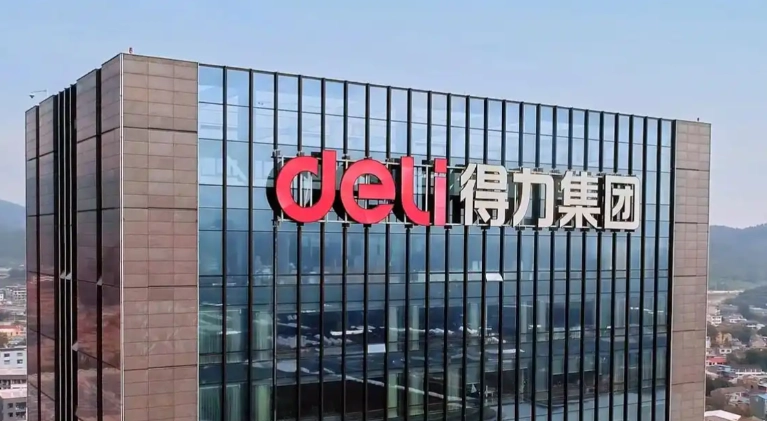
During the cycle in which traditional stationery giants are aggressively pivoting toward smart office solutions and intelligent hardware, capital flashes emerge from core technology subsidiaries. Recently, Deli Intelligent IoT Technology Co., Ltd. underwent a highly significant business registration change, with its registered capital sharply reduced from 500 million RMB to 250 million RMB—a full 50% cut.
This substantial capital reduction of 250 million RMB not only signals that the Deli Group has pulled back some of its long-term investment from intelligent IoT, a strategic new venture once viewed with high expectations, but also marks a moment when traditional manufacturing giants, facing high-frequency consumption battles in the intelligent space, have begun to reassess the granularity of their asset allocation.
Most casual observers, accustomed to interpreting Deli through the lens of pencil cases, printers, and office paper shredders, tend to view this capital change as routine financial compliance. That view clearly underestimates the deep strategic friction that traditional hardware brands face in advancing the "Internet of Everything" during the current macroeconomic cycle marked by cautious consumption and tightening enterprise (B2B) procurement budgets.
To fully understand the underlying interest chain and root causes behind this major capital reduction, one must use Tianyancha to penetrate down to the company's core foundation.
Founded in May 2019, Deli Intelligent IoT Technology Co., Ltd. is wholly owned by Deli Group Co., Ltd., with legal representative Liu Xudong. A closer look at the business scope disclosed on Tianyancha reveals hardcore technology labels such as IoT technology R&D, professional design services, and information system integration services, each complementing the others. Five years ago, when the Deli Group invested 500 million RMB to establish this entity, the core driver was to shed the low-margin traditional stationery label and, through IoT hardware like smart printers, cloud attendance machines, and intelligent conference displays, weave a smart office network of its own.
However, the intelligent IoT track is a natural devourer of computing power and R&D resources.
To extract premium value within the IoT ecosystem, a company must not only manufacture hardware on the front end but also maintain a massive cloud platform architecture, frequently updated software algorithms, and information system integration services that are heavily dependent on labor. During the past transition period, Deli not only had to fend off encirclement by traditional office equipment giants but also engage in close combat with the smart office ecosystems of major internet tech companies.
Choosing to forcibly halve the registered capital at this point lays bare Deli Group's cold calculation regarding asset revitalization and risk hedging: at a time when the growth rate of B2B intelligent hardware dividends is slowing, rather than letting 250 million RMB in cash remain rigidly parked as registered capital on the books of an IoT subsidiary with a lengthy R&D payback cycle, it makes more sense to withdraw that capital and reinject it into the group's more stable supply chain hub or core manufacturing operations.
The way this slow-moving business is being settled sends a clear strategic warning.
While a 500 million RMB registered capital base could tell an ambitious cross-industry story at the starting line, a company's viability ultimately hinges on its ability to monetize every square meter of building space and every software algorithm with precision. In the current cycle, where large-scale asset investment leans toward targeted defense, Deli Group's strategic retreat is, in fact, a mature choice to hedge systemic risk through a lighter asset base, drawing a line under its era of unchecked intelligent expansion.