DBN sets up a seed company in Nansha, betting 10 million yuan on South China and seeking to break out of the hog cycle through breeding.
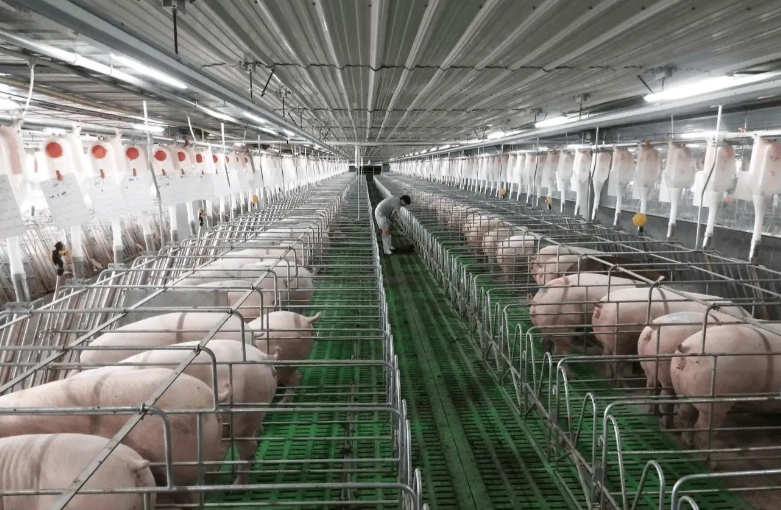
At a time when the pig farming industry is still struggling through a long ordeal of losses and razor-thin profits, Dabeinong, China's feed and pig farming giant, has quietly placed an intriguing piece on the chessboard along the coast of South China. Establishing a seed company in Nansha, Guangzhou, with registered capital of 10 million yuan may seem like a trivial attempt at scale, but at a transformation juncture where Dabeinong's core business has been repeatedly ravaged by the pig cycle and urgently needs to build a second growth engine through biological breeding, this move into the seed industry from north to south is by no means a routine expansion of a South China office, but a key trial by a Chinese seed industry giant to use the Greater Bay Area gateway to open up tropical and subtropical germplasm resources and even seek to take seed industry technology overseas to Southeast Asia.
Following the trajectory of changes in the underlying commercial registration to penetrate the rights and responsibilities of this new entity, its strategic weight within the Dabeinong group is clearly visible in Tianyancha records. Tianyancha business registration data shows that Dabeinong (Guangdong) Seed Industry Development Co., Ltd. was officially established on September 16, with registered capital of 10 million yuan, wholly subscribed and held by Beijing Dabeinong Technology Group Co., Ltd., with its registered address chosen in Guangzhou's Nansha District, which enjoys multiple free trade and tax preferences.
A particularly noteworthy key detail is that the legal representative of this entity is directly Mao Changqing.
In agricultural investment circles, Mao Changqing is by no means an ordinary professional manager. As a former chief agricultural analyst and vice chairman of Dabeinong, he has long led the integration of Dabeinong's seed industry assets and the industrialization of biological breeding technology. Having a core operator personally take charge of a newly established subsidiary with only 10 million yuan in capital directly overturns outside judgments that this is an ordinary rollout of regional sales outlets.
Although Dabeinong has already built relatively high technical barriers in the northern corn and soybean transgenic trait track, the planting climate, crop varieties, and even commercial circulation rules of the south are vastly different from those of northern dryland agriculture. Having a key lieutenant lead the Nansha effort is essentially the group's move to leverage local resources with the highest organizational decision-making efficiency amid the fragmented landscape of the southern seed industry.
The spatial choice of setting up in Nansha, Guangzhou, conceals a precise industrial and geographical calculation.
For a long time, the commercial map of China's seed industry has shown extremely fragmented regional characteristics: the Northeast and North China focus on corn and soybeans, the middle and lower reaches of the Yangtze River deepen hybrid rice, while South China, centered on Guangdong and Hainan, is the frontier for tropical and subtropical crop generation-advancing breeding and research and development of high-end vegetables and specialty crops. Nansha not only enjoys the policy dividends of the Greater Bay Area agricultural science and technology cooperation platform, but also has deep-water ports with access to international shipping.
As the channel game faced by the commercialization of domestic transgenic traits becomes increasingly complex, extending breeding reach to South China can not only use the southern climate conditions to accelerate the screening cycle of conventional varieties and biological breeding, but also build an overseas bridgehead for Chinese germplasm technology to enter overseas emerging agricultural markets with similar climates, such as Southeast Asia and Latin America.
However, peeling back the glossy exterior of this lightweight 10 million yuan entity, Dabeinong's calculations in the deep waters of the seed industry also face unavoidable real-world resistance.
China's southern rice and fruit and vegetable seed industries have long been firmly controlled by the Guangdong Academy of Agricultural Sciences system, the Syngenta camp, and established local seed enterprises, and regional channel distribution networks are extremely closed and exclusionary. As a comprehensive agricultural giant rooted in the north and built on feed and pig farms, for Dabeinong to cultivate its own dealer loyalty and technical trust in South China from scratch, the initial investment of 10 million yuan is merely a drop in the bucket as a calling card.
More severe is that the seed industry has never been a light-asset track capable of producing immediate returns. The selection, approval, and large-scale promotion of a high-quality seed often require a long cycle of five to eight years and the accumulation of huge amounts of capital. At a time when the core pig business itself has weak cash generation and tight cash flow, how long Dabeinong can keep supplying real money to this Nansha experimental field remains full of uncertainty.
This 10 million yuan platform move in early autumn sends the clearest signal to the entire Chinese agricultural technology track: traditional giants that rely on a single cyclical farming business for their livelihood must complete a perilous leap toward becoming biotechnology companies. Leveraging Nansha's geographical advantages and the personal leadership of a core executive, Dabeinong is trying to carve out a new growth crack in the south, but how to survive the long research and development transformation cycle in the paddy fields of South China surrounded by strong rivals is a tough battle this newly established company must directly confront after its listing.