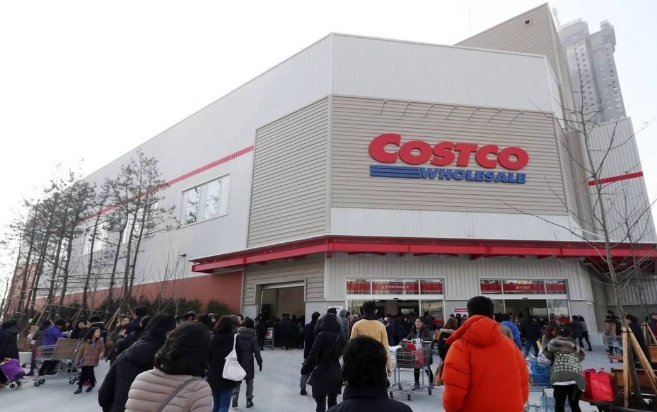
Costco Penalized for Illegal Food Production and Sales, Exposing Global Supply Chain Struggles and Compliance Failures in China
Costco's fine for illegal food production and sales highlights its global supply chain's failure to adapt and compliance issues in the Chinese market.
When a warehouse club giant with formidable global bargaining power and a registered capital explicitly listed as $100 million is fined 50,000 yuan and forced to forfeit illegal gains by the Shenzhen Municipal Market Supervision Administration for "illegal engagement in food production and operation"—an extremely basic compliance red-line issue—the immunity pass that foreign retail giants have constructed in the deep waters of localization is now facing its coldest and most rigid reckoning.
Recently, an enforcement penalty was sharply recorded in the operational risk profile of Costco (Shenzhen) Trading Co., Ltd. The large numbers of urban middle-class consumers who are accustomed to rushing to Costco on weekends to snap up rotisserie chickens and queuing while pushing giant shopping carts to fuel their faith in the "Sam's Club alternative" tend to dismiss this incident as carelessness by local store managers or a trivial routine public-relations fine. This simplistic reasoning grossly underestimates the managerial sluggishness that multinational retail giants exhibit when confronting China's extremely agile food-safety regulatory storm and the brutally muddy close-quarters combat of supply chain operations.
The noisy negative online discourse is merely a veneer. To see clearly the systemic collapse of the long-term compliance framework behind the $100 million capital myth, one must use Qichacha to penetrate its capital foundation and operational network.
Qichacha's business registration data clearly shows that Costco (Shenzhen) Trading Co., Ltd. was established in August 2020, with legal representative Zhang Shuyun, and is wholly controlled by Costco (China) Investment Co., Ltd. at 100 percent. Within its business scope, wholesale of edible agricultural products, food sales, and import/export of goods are all interconnected.
This posture of being a wholly owned direct subsidiary, as displayed in the Qichacha system, was once its top-tier arsenal for expanding store footprints in Shenzhen and the South China market, going head-to-head against Sam's Club. But now, "food production and operation" written on the business license has become a severely problematic area triggering regulatory red flags.
Costco's core tragedy lies in the fact that it is extremely reliant on transplanting and replicating its global supply chain, yet when confronting China's hyper-competitive on-site prepared food manufacturing and long-tail quality control, it suffers from severe systemic maladaptation. As a typical American-style hard-discount warehouse store, Costco's core moat is leveraging the scale leverage of global procurement to aggressively drive down the purchasing costs of bulk-packaged goods. However, in South China—a consumer heartland with extremely high demands for freshness and prepared food processing procedures, coupled with a regulatory granularity that is tightening without limit—Costco's massive management bandwidth is beginning to experience irreversible diminishing returns at the margins.
Whether it is procedural overstepping in back-kitchen cooked food processing or technical labeling violations on pre-packaged food, these are essentially the result of a lack of reverence for the detailed rules of local "food production and operation licensing" born from the arrogant inertia of global procurement.
In the current retail ecosystem, the traffic myth built purely on "favored by the middle class" and "low prices for bulk sizes" can no longer provide long-term compliance shelter. The seemingly massive $100 million registered capital on Qichacha loses all its capital premium dignity in the face of the cold 50,000-yuan fine and the rigid determination of "illegal engagement." As domestic authorities pursue penetrating accountability for major food safety hazards, what this incident reflects is the fatigue of foreign warehouse stores in managing comprehensive cost control amid logistics automation and the forward shift of frontline defense lines. If they cannot take the lead in completing a fully closed-loop cleanliness overhaul in the extremely muddy back-kitchen dead zones and supply chain compliance, any warehousing empire built on capital will ultimately be ruthlessly devoured by the iron law of food safety.