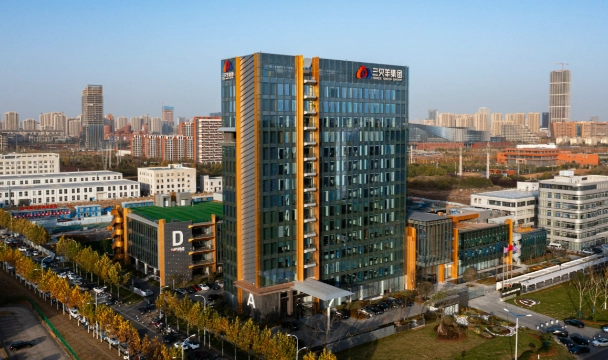
Three Sheep's farming assistance operating company was dissolved less than a year after its founding, exposing the profitability and compliance challenges of traffic giants venturing into agriculture, with strategy shifting from deep operations to traffic monetization.
Crazy Little Yang's ambition to support farmers appears to be undergoing a quiet but significant organizational contraction. The recently published simple cancellation notice for Hefei Sanzhiyang Agricultural Support Operations Management Co., Ltd. reads like a hasty conclusion to an aggressive experiment. From its establishment in June 2023 to the current cancellation application, this entity with a registered capital of 10 million RMB existed for less than a year within Sanzhiyang's sprawling business map. Such a short lifecycle exposes the difficult-to-reconcile profit logic and management anxiety that top-tier MCN institutions face when venturing into the deep waters of cross-industry agriculture.
The term "agricultural support" often carries an inherent moral exemption in the context of livestream e-commerce, but returning to business fundamentals, agriculture is the graveyard of all quick-money industries. Sanzhiyang previously attempted to enter the agricultural supply chain through an operations management company, essentially aiming to use traffic leverage to pry open an extremely heavy non-standardized product sector. However, the equity structure revealed by the Tianyancha App highlights the complexity of this collaboration: in addition to Sanzhiyang's own technology company, the shareholder list also includes Anhui Zhonghuan Construction and Anhui Runfuyuan Information. This architecture, forcibly stitching together a construction party, an information technology party, and a traffic party, looks more like a "project company" temporarily assembled to secure specific local projects rather than a long-term industrial layout.
The deep-rooted reason for this cross-industry combination lies in Sanzhiyang's earlier underestimation of the ruthlessness of the agricultural supply chain. The construction party's involvement likely points to cold chain logistics or warehousing infrastructure, while the information technology party attempts to solve the traceability problem of non-standardized agricultural products. But in the 2026 market environment, traffic dividends can no longer mask weak gross margins. The high attrition rates, low profits, and extremely fragile brand premium of agricultural products make MCN institutions, accustomed to high turnover and high commissions, deeply uncomfortable. Canceling this operations management company is essentially Sanzhiyang's stop-loss retreat after realizing that the "heavy-asset operation" agricultural model cannot work.
The more critical driver is the pressure of compliance risks. After several earlier product selection controversies, Sanzhiyang's brand reputation can no longer afford any quality flaw under the banner of "agricultural support." The difficulty of quality control for agricultural products scales exponentially. When the operations management company cannot resolve the conflict between smallholder farming and large-scale livestream fulfillment at a fundamental level, this middle layer becomes the biggest source of risk. As visible on Tianyancha, the company's business scope covers agricultural scientific research and experimental development — a high-sounding title that, without genuine R&D investment backing, often morphs into a compliance burden.
Cancellation does not mean Sanzhiyang is abandoning agriculture; it means its strategy is retreating from "deep operational involvement" back to "traffic harvesting." For Zhang Qingyang, rather than maintaining an unwieldy operations company with mixed equity, it makes more sense to consolidate business back into core, wholly-owned subsidiaries with tighter control. This shift from "heavy" to "light" reflects the survival instinct of traffic giants facing increasingly stringent regulatory scrutiny and ever more demanding supply chain management requirements in early 2026.
Agricultural modernization requires long-cycle technological accumulation, not short-cycle traffic parties. The cancellation of this company with 10 million in registered capital declares that the logic of integrating fragmented rural output value through an "operations shell" has completely failed in the face of top-tier traffic. A broken profit chain often begins with a lack of reverence for the industry. On a track that demands the feel of soil, microphones and shouting-style livestreams are far from sufficient.
Sanzhiyang's cancellation move also hands a sobering bill to all MCN institutions attempting to enter agriculture. If breakthroughs cannot be made in hardcore areas like breeding, standardized production, and loss control, so-called agricultural support operations companies will ultimately be reduced to a cold line in a Tianyancha cancellation notice. This is not just a financial settlement for Sanzhiyang — it is the livestreaming industry as a whole bowing to real industrial logic after its period of barbaric growth.
The ending of this cancellation was already written in the "resource patchwork" equity structure at the company's founding. When traffic cannot be converted into industrial sovereignty, retreat is the most dignified form of preservation. Sanzhiyang is rapidly pruning the branches that could trigger public opinion explosions, trying to regain its former certainty in a purer e-commerce game. And those partners who once pinned hopes on traffic giants to bring about industrial transformation can only, in the closing act of this capital game, each look for their next exit.
From a longer-term perspective, such agricultural support experiments driven by traffic giants will ultimately shift from "operations management" back to "platform enablement." In the 2026 business environment, no MCN can truly take over China's fragmented agricultural foundation. Canceling this company is Sanzhiyang's first step back to reality. Any speculation that tries to overstep the laws of an industry will ultimately be reduced by cold financial statements and volatile regulatory environments to its truest colors.