The Stranglehold of 270 Million Cubic Meters of Cold Storage and 30,000 Smallholders: The Brutal Clearing Under the Asset-Heavy Upgrading of Cold-Chain Logistics
The cold-chain logistics industry is undergoing an asset-heavy reshuffle, with 270 million cubic meters of cold storage and giant capital clearing smallholders and eliminating small and medium-sized fleets.
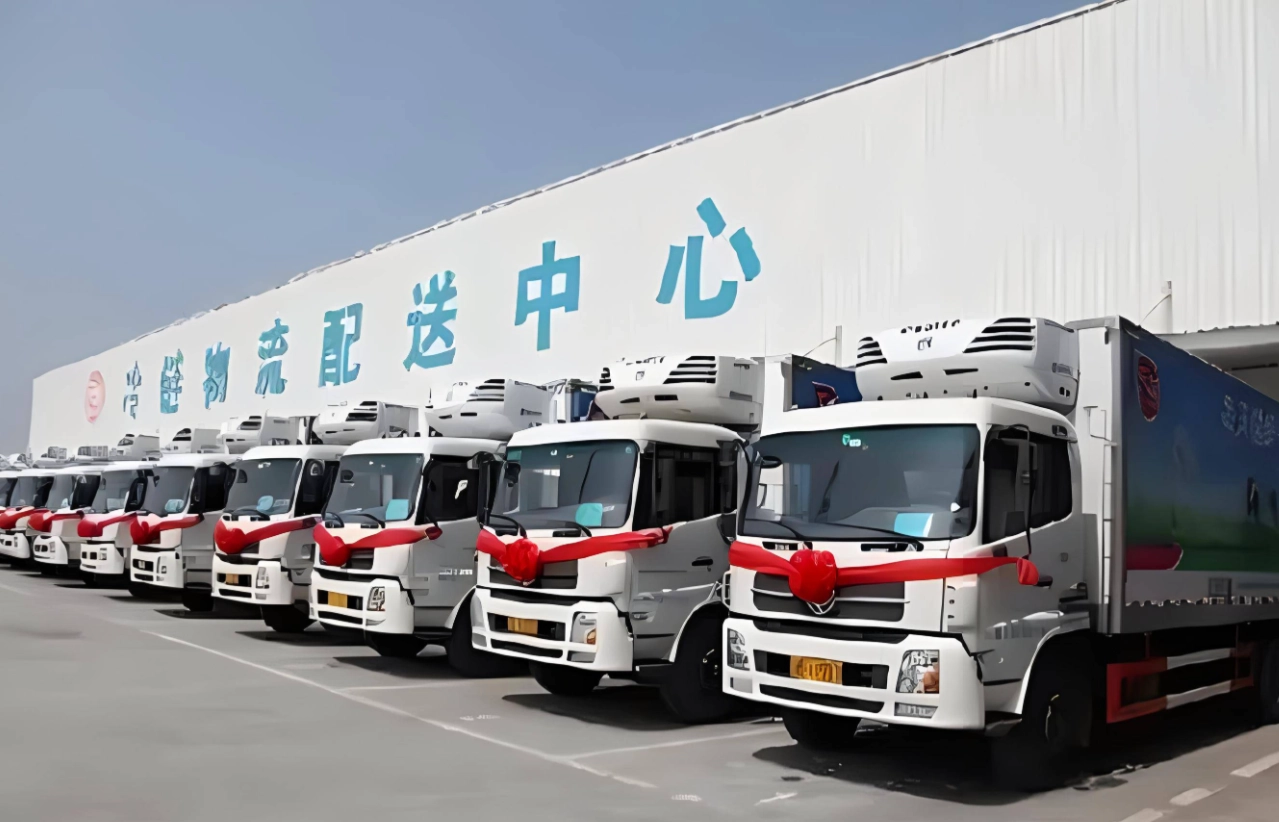
When 270 million cubic meters of cold storage capacity and 105 national backbone bases are presented as the report card for logistics upgrades, the outside world tends to only see the consumer spectacle of seasonal fresh produce being supplied year-round without interruption. However, if you peel back this layer of warmth covering temperature-controlled loading docks and new-energy refrigerated trucks, the entire cold chain logistics track is undergoing an extremely brutal heavy-asset reshuffle.
This is by no means a universal dividend benefiting the entire industry, but rather a physical-level purge, jointly launched by giant capital and top-level planning, targeting traditional fresh produce middlemen and individual cold chain truck owners.
For a long time, domestic cold chain transportation has been riddled with crude insulation methods relying on "quilts plus ice." This extremely primitive fulfillment approach managed to survive guerrilla-style on ultra-low quotes back when fresh e-commerce had not yet fully penetrated lower-tier markets. But now, front-end livestream selling and instant retail have squeezed the turnaround time for fresh produce circulation down to the minute level, and terminal tolerance for loss rates has dropped to absolute zero.
Any fruit softening or frozen meat thawing caused by a broken cold chain will, under the strict penalty mechanisms of e-commerce platforms, directly puncture the logistics provider's cash flow bottom line. The mandatory adoption of new remote temperature-controlled containers is essentially using the high barrier of hardware depreciation to forcibly kick out the scattered operators who earned razor-thin margins by exploiting information gaps.
Following the business registration trail accumulated by Tianyancha, the cruelty of this capital ebb and capacity squeeze is laid bare. Tianyancha professional edition data shows that there are only about 32,000 currently existing cold chain transportation-related enterprises nationwide. What is particularly telling is its registration curve over the past five years: peaking in 2021, plummeting sharply in 2022, and then struggling to hold steady at a level of just over 2,000 new registrations per year.
This parabola captures with remarkable precision the capital frenzy during the community group-buying wars of a few years ago, and the mess left behind once subsidies ran dry. When the game of burning cash to scale up ended, those micro carriers trying to grab a slice of the cold chain end market had already been reduced to ashes under the immense pressure of heavy assets.
This industrial consolidation and reshuffle is equally reflected in the extreme geographic distribution. In the regional map disclosed by Tianyancha, Guangdong, Henan, and Hunan provinces together account for over 30% of the total number of enterprises. This is by no means random geographic clustering, but rather cold industrial determinism.
Guangdong guards the first gateway for high-value-added imported fresh fruit and seafood, and must lock in cargo value with the most expensive cold chain facilities; Henan, as the country's extremely large base for frozen food and meat processing, relies on its cold chain network as the capillaries sustaining the Central Plains food industry; and Hunan, leveraging its throat position as a central hub, handles the massive transfer of fresh produce moving north and south.
Only heavy players attached to these core industrial belts have the confidence to invest in temperature-controlled enclosed loading docks costing tens of millions of yuan.
Cold chain logistics has never been a business where you can spin a story with light assets. With the forced expansion of national backbone cold chain bases during the aquatic product harvest season, a temperature-controlled network that welds the central and western regions tightly to the east has already taken shape. In this hardcore battle to restructure the entire fresh produce circulation chain, what determines a company's survival is no longer who can grab a few truckloads of fruit transport orders, but who can use the densest temperature-controlled nodes and the most powerful temperature-control computing capability to keep the temperature fluctuation of the entire supply chain within a fraction of a degree.
Small and medium-sized cold chain fleets lacking the risk-resistance capability of heavy assets are destined to be quietly cleared out by cold market rules outside this temperature-controlled fortress built with tens of billions of yuan.