Fosun spins off Club Med for a Hong Kong listing in a bid to reduce leverage, but hefty leases and offshore debt erode profits, casting doubt on its asset-light credentials.
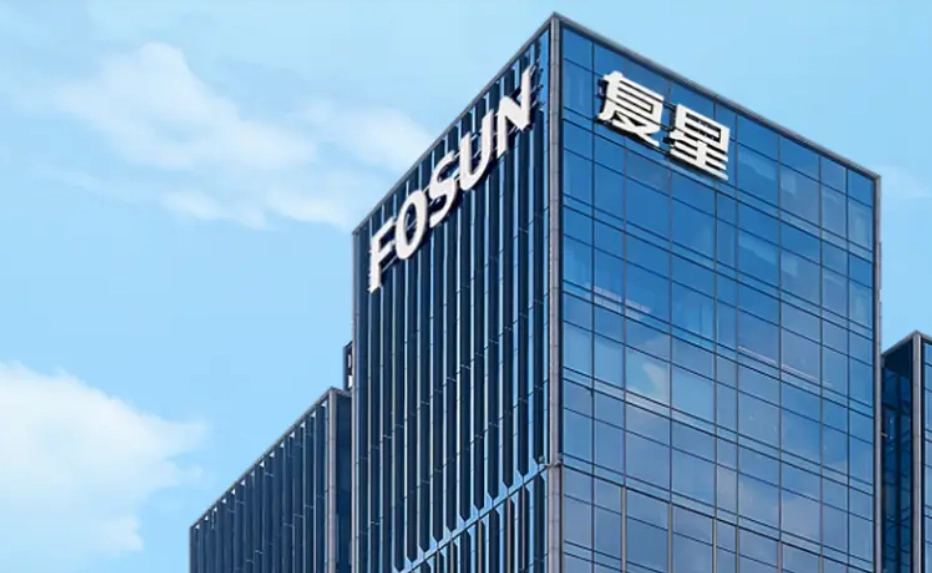
When Club Med Lifestyle Group, under Fosun International, officially submitted a main board listing application to the Hong Kong Stock Exchange, only a year and a half had passed since Fosun Tourism Group completed its privatization and delisting. The capital market is no stranger to this global pioneer of "all-inclusive" resorts with a 76-year history: from Fosun spending approximately 916 million euros to privatize it from Euronext in 2015, to packaging it into Fosun Tourism Group and listing on the Hong Kong stock market in 2018, and now spinning off its core brand for an independent second冲刺 of a Hong Kong listing, the same batch of assets has entered and exited the public capital markets three times in nine years.
If this round of spin-off listing is viewed merely as routine overseas cultural tourism expansion, then the financial significance of the Fosun system during its long deleveraging cycle has been completely misread—this is by no means a simple extension of the business map, but rather, in the process of Guo Guangchang shedding heavy-asset real estate burdens and restructuring the balance sheet, the most high-quality global cash cow asset within the group is being pushed alone to the capital forefront, in order to achieve a precise maneuver of valuation arbitrage and offshore debt offloading.
From Mixed Reporting to Independent Spin-off: Fosun Tourism's Pricing Confusion and Privatization Ending
In the early listing narrative of Fosun Tourism, the capital market always faced severe pricing confusion. Club Med's global high-end resort brand premium and the abundant cash flow of Sanya Atlantis were forcibly mixed together in the same financial statement with the heavy-asset real estate development risks accumulated by large cultural tourism projects in Taicang, Lijiang, and other places.The real estate downturn cycle and heavy-asset accumulation dragged down the overall liquidity and price-earnings ratio of Fosun Tourism, causing its stock price to remain more than 80% below the issue price for a long time, and ultimately it had to end through privatization.
Now the Mediterranean resort group making a comeback has precisely cut off the umbilical cord with domestic heavy-asset cultural tourism real estate, attempting to tell international investors a pure story of a "light-asset, globalized, high-net-worth family vacation ecosystem."
Domestic Operating Entity and Offshore Holding Top Level: The Cross-Border Control Chain of 542 Million Yuan in Paid-in Capital
Following the traces left at the underlying commercial level to penetrate the governance structure of this multinational cultural tourism giant, its layered domestic and overseas capital foundation is clearly presented in Tianyancha archives. Tianyancha business registration data shows that Shanghai Club Med Vacation Travel Agency Co., Ltd., the core entity undertaking Club Med's tourism and distribution operations in mainland China, was established in 2010, with Xu Bingbin as its legal representative and registered capital of approximately 542 million yuan.
In the equity map penetrated by Tianyancha, the company is wholly owned by the overseas legal person CLUB MED ASIE S.A., forming an extremely clear cross-border control chain of "offshore holding entity—Asian operating company—domestic wholly owned travel agency."
The domestic entity with 542 million yuan in paid-in capital is a key fulcrum for Club Med to develop China's suburban travel and ice-and-snow resort market, but it is not equivalent to the debt issuance and fundraising parent entity for this Hong Kong listing.
The domestic operating company is mainly responsible for channel sales, inbound and outbound ground services, and brand licensing implementation for 12 domestic resorts, while Club Med Lifestyle Group, which submitted the listing application to the Hong Kong Stock Exchange this time, is the offshore holding top level located in the Cayman Islands.The hierarchical mismatch between the two not only achieves compliance isolation for the foreign resort brand's domestic qualification to operate inbound and outbound tourism, but also ensures that future listing fundraising proceeds can be fully deposited within the overseas offshore system, directly used for overseas debt replacement and global resort expansion.
Stagnant Revenue and Shrinking Profit: Examining the Financial Quality Beneath the Light-Asset Cloak
However, after shedding its real estate burden, Club Med's true financial quality faces strict scrutiny.
Prospectus data shows that from 2023 to 2025, the Mediterranean resort group's operating revenue was 1.862 billion, 1.923 billion, and 1.949 billion euros, respectively, with year-on-year growth sharply slowing from 3.3% to 1.3%; in the first half of 2026, revenue was 1.083 billion euros, a slight year-on-year increase of only 0.2%.Alongside nearly stagnant revenue is a sharp shrinkage in net profit: from 68.77 million euros in 2023 down to 10.92 million euros in 2025, shrinking by more than 80% over two years.
The core ailment causing profits to be heavily eroded lies precisely in the high financial and leasing burdens hidden behind its seemingly "light-asset" appearance.
Among the 69 resorts currently operated by Club Med, only 19 are truly pure light-asset projects using management contract output, while 41 resorts adopt a long-term lease model with lease terms as long as 15 years, accounting for nearly 60%. Although leasing avoids early land acquisition and property construction expenditures, under the new leasing standard (IFRS 16), the enormous lease right-of-use assets directly push up total liabilities.
The company must rigidly pay more than 200 million euros in lease payments each year, plus more than 100 million euros in annual offshore high-interest debt interest, and the two together consume almost the vast majority of operating profit. After deducting actual lease payments and capital expenditures, the originally seemingly enormous hundreds of millions of euros in operating cash flow is compressed into an extremely thin free cash balance.
Growth Ceiling and Expansion Model Tension: The Aggressive Target of 85 Resorts by 2030
A more hidden pain point lies in the tension between the growth ceiling and the expansion model.
According to the listing materials, the company plans to aggressively expand its global resort network from 69 to 85 by 2030. However, Club Med's average customer spending is already in the extremely high range of over 4,000 euros. Against the backdrop of core consumer markets in Europe and America being squeezed by cost-of-living inflation, and emerging markets in Asia-Pacific being besieged by price wars from local mid-to-high-end resort brands, the room to increase revenue per available bed (RevPab) solely by raising prices has become extremely narrow.
If the 16 new resorts in the future still rely heavily on long-term leases with heavy rent, it will not only fail to optimize the capital structure, but will further amplify the exposure to rigid rupture of fixed costs amid global macroeconomic fluctuations.
Spin-off Cannot Erase Debt Erosion: What International Institutional Investors Ultimately Pay For Is Hardcore Capability
This independent Hong Kong listing spin-off occurring at the turn of summer and autumn has sounded a sober alarm for the entire multinational cultural tourism investment and group capital operation sector:asset spin-off can indeed create staged isolation of financial appearances, but it cannot fundamentally erase the substantive erosion of profitability by high offshore liabilities and heavy leasing assets. When Fosun pushes this core cultural tourism asset onto the judgment stand of the Hong Kong capital market, what international institutional investors ultimately pay for will not just be a utopian vacation story with more than seventy years of sentiment, but rather its down-to-earth hardcore ability to completely shake off the landlord shackles and truly realize profits through pure management fees and brand premiums.