China Merchants Shekou takes over Zhaohua Exhibition with negative net assets for 500 million, using accounting remeasurement to boost profit by 500 million, drawing attention to its light-asset valuation.
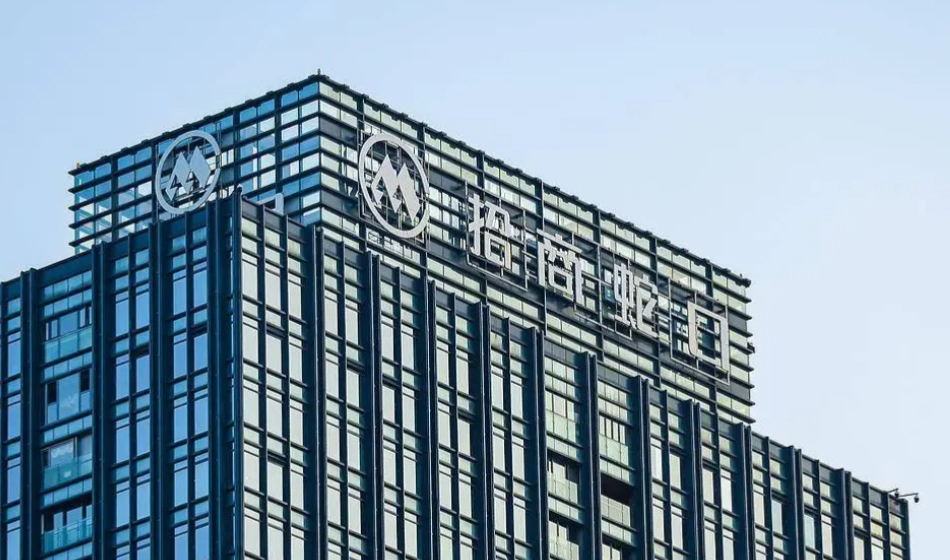
When China Merchants Shekou announced that its wholly owned subsidiary, Shenzhen China Merchants Real Estate, had acquired a 50% stake in Shenzhen Zhaohua International Convention and Exhibition Operations Co., Ltd. for 506.5 million yuan through a listing transfer by OCT, the capital market first seized upon a set of highly dramatic financial disparities: a light-asset operating entity with net assets of negative 109 million yuan as of the end of 2025 was assigned a total equity valuation of as high as 1.013 billion yuan by the appraiser, while China Merchants Shekou even directly forecast in its announcement that through accounting treatment involving remeasurement at fair value, this transaction is expected to contribute approximately 500 million yuan in net profit attributable to the parent company to its 2026 books out of thin air.
Buying a joint venture platform that is insolvent, far from requiring the recognition of goodwill impairment, instead instantly thickens paper profit by 500 million yuan. This handover of chips between two central state-owned real estate giants tears open the deep game among central state-owned enterprises in liquidity relief, financial statement embellishment, and revaluation of light-asset property management platforms after the disintegration of the consortiums formed during the golden age of real estate development.
The Disintegration of the Central State-Owned Consortium and the Logic of the Transaction
Looking back at the land acquisition and development history of the Shenzhen International Convention and Exhibition Center, the alliance between China Merchants Shekou and OCT was once the most representative "giant combination" in the development of commercial complexes in South China and even across the country. In the core area of Shenzhen's Greater Airport新城, with a total gross floor area of more than one million square meters, the two parties jointly undertook enormous heavy-asset investment integrating exhibition venues, supporting commercial facilities, hotel clusters, and office buildings. However, after years of operation, the honeymoon period in which they once shared dividends had long been completely frozen by the harsh winter of the real estate industry.
For OCT, which is mired in slow sales of cultural tourism real estate and faces enormous cash flow bleeding pressure, comprehensively contracting non-core battle lines and cashing out 500 million yuan in real money by listing the joint venture equity for transfer on the Beijing Stock Exchange is an extremely urgent move to cut off an arm to stop the bleeding. For China Merchants Shekou, taking sole control of the exhibition operations rights for the world's leading single-building gross floor area is a key leap in concentrating commercial operations rights under a single entity.
The Equity Foundation and the Truth of Negative Net Assets
Tracing the underlying commercial records to penetrate the equity foundation of this operational hub, the seven-year power balance between the two giants is clearly visible in Tianyancha data. Tianyancha business registration data shows that Shenzhen Zhaohua International Convention and Exhibition Operations Co., Ltd. was established in December 2017 with registered capital of only 10 million yuan, and had long been held 50% each by Shenzhen OCT Real Estate and Shenzhen China Merchants Real Estate. In the associated paths penetrated by Tianyancha, the target directly corresponds to the vertical control chain of China Merchants Shekou and Shenzhen China Merchants Real Estate.
What 10 million yuan in registered capital leveraged was an entity with total assets of 543 million yuan and total liabilities of 652 million yuan, or negative net assets.
The negative net assets are mainly attributed to the huge preliminary start-up expenses accumulated during the incubation period of the early exhibition project, equipment amortization, and liabilities recorded as related-party current accounts with the parent entity. However, it is precisely such a company that is insolvent at the balance sheet level, yet under the income approach valuation it exploded to a high valuation of more than 1 billion yuan. The key driver lies in its 2025 operating revenue of 558 million yuan and net profit of 41 million yuan.
As the sole franchised operator of the Shenzhen International Convention and Exhibition Center, its business model is essentially a typical "light-asset rent and service revenue-sharing commission," not bearing the enormous venue land depreciation and construction interest, yet sitting on the high cash flow from venue rent, advertising, catering, and build-out value-added services brought by dozens of super-large industrial exhibitions each year. Stable and growth-potential cash-generating capacity has become the only fulcrum enabling the valuation premium to break free from the gravitational pull of book net assets.
The Ultimate Use of Accounting Standards and 500 Million Yuan in Paper Profit
The more exquisite capital operation lies in China Merchants Shekou's ultimate use of accounting standards.
According to the step acquisition provisions of the Accounting Standards for Business Enterprises for business combinations not under common control, when China Merchants Shekou jumps from joint control to 100% wholly owned control, its original 50% old equity must be remeasured at fair value on the acquisition date (that is, the transaction consideration of 506.5 million yuan). The previously very low book value under the equity method, after the enormous difference between fair value and book value is directly net of related taxes, is recognized as investment income, thereby directly generating approximately 500 million yuan in net profit attributable to the parent company on the income statement out of thin air without adding any substantive external operating cash inflow.
Against the severe backdrop in which the gross profit margin of core residential development for real estate enterprises has generally fallen to single digits or even faces provisions for inventory price declines, this 500 million yuan consolidated accounting dividend is tantamount to injecting a powerful reassurance pill into China Merchants Shekou's full-year performance targets.
Potential Hidden Reefs and Cyclical Risks
However, this seemingly perfect capital maneuver is not without hidden reefs.
After 100% control of Zhaohua Exhibition, China Merchants Shekou will not only have to swallow all of the company's liabilities wholesale, but will also alone bear all cyclical risks of large exhibition projects subject to macroeconomic fluctuations and fluctuations in the prosperity of foreign trade exhibitions. At a time when the supply of exhibition venues in Shenzhen and around the Greater Bay Area continues to expand and the budgets of domestic and international exhibitors are increasingly tightening, whether it can maintain a net profit level of more than 40 million yuan per year over the long term directly determines whether its 1 billion yuan valuation bubble can be filled by real performance.
Once future exhibition visitor attraction falls short of expectations and causes profits to shrink, not only will the high valuation on the books face the backlash of goodwill impairment devouring profits, but the paper wealth previously earned through fair value will also become a heavy operating yoke.
The Grim Reality of the Stock Real Estate Operations Track
This equity split between Nanshan Shekou and OCT reveals a grim reality to the entire stock real estate operations track: after the traditional residential development model peaked, the reshuffling among real estate enterprises has penetrated into the stock liquidation of joint venture assets. The weak exchange operating assets for a precarious bit of liquidity, while the strong maintain the illusion of growth through mergers and acquisitions that integrate light-asset operating rights and financial statement techniques.
But after the capital magic exits, what lies before the operators is still a severe grand test of whether heavy-asset landmarks can continue to squeeze out real money through refined operations.