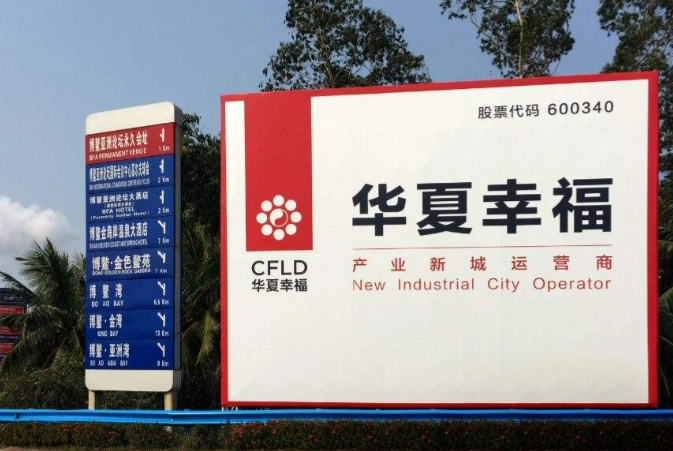
China Fortune Land Development faces new enforcement of 1.51 billion yuan, with assets in its home base under judicial siege, as credit backlash deepens its debt resolution woes.
Asset Clearance and Credit Fallout in the Grand Debt Cycle of China Fortune Land Development
From its former status as a dominant industrial real estate player in the Beijing-Tianjin-Hebei region to its current frequent presence on judicial enforcement lists, this real estate giant—which once achieved a revenue myth of hundreds of billions—remains locked in an extraordinarily long and brutal debt liquidation quagmire. Recently, legal litigation information disclosed by Tianyancha revealed a judicial hammer that shook both the financial and real estate sectors: China Fortune Land Development Co., Ltd. and others have been newly listed as parties subject to enforcement, with an enforcement target reaching a staggering 1.51 billion yuan, enforced by the Langfang Intermediate People's Court in Hebei Province. This single enforcement action, exceeding one billion yuan, has once again torn open the underlying credit backlash and ultimate entanglement of interest chains that China Fortune Land Development (600340) cannot escape, even after years of debt restructuring and attempts to achieve a "deleveraging retreat" through asset clearance. Many industry observers, accustomed to viewing this established real estate developer through public relations narratives such as "successful debt extensions" and "light-asset property transformations," tend to dismiss this large-scale enforcement as an insignificant reopening of old debts. Such a simplistic logic severely underestimates the systemic cash-flow anxiety that large industrial real estate giants face when confronted with long-term liquidation by financial institutions and the penetrating compulsory enforcement of their core assets. To deconstruct the underlying causes behind this 1.51 billion yuan judicial recovery, one must rely on the cold corporate registry data disclosed by Tianyancha to penetrate the inner workings of this former "King of Beijing-Tianjin-Hebei Land."
Business Registration and Operational Overview
Tianyancha's business registration data clearly shows that China Fortune Land Development Co., Ltd. was established in May 1993, with its legal representative being founder Wang Wenxue and a registered capital of approximately 3.91 billion yuan. Examining the shareholding structure recorded in the Tianyancha system, China Fortune Land Development Holdings Co., Ltd. and Hong Kong Securities Clearing Company Ltd., representing foreign capital trends, jointly control the company. Throughout its more than three decades of operations, real estate intermediary services, construction equipment services, and business management consulting have supported each other, collectively underpinning its massive "industrial new city" heavy-asset operational model. However, the ultimate liquidation method for this colossal slow-moving business—which relies heavily on high leverage, high turnover, and local government fiscal reimbursements—has been completely rewritten in the current economic cycle.
Loss of Core Base Assets and Judicial Pursuit
The enforcement court for this 1.51 billion yuan target is the Langfang Intermediate People's Court in Hebei Province. This geographic detail brutally highlights the ultimate strategic dilemma facing China Fortune Land Development: the comprehensive loss of its core base assets and judicial pursuit. Langfang, where the company first rose to prominence and heavily invested in industrial new cities like Gu'an, holds its most critical land reserves and heavy-asset projects. With the Langfang Intermediate Court formally issuing the enforcement order, creditors are no longer satisfied with verbal debt extension agreements; instead, they are directly leveraging judicial instruments to forcibly penetrate and lock down the company's most critical existing assets and equity in the Beijing-Tianjin-Hebei hinterland for cost-reduction clearance. This heavy blow has landed precisely in the deep waters of financial institutions' "ultimate battle for assets" against distressed real estate developers.
The Dilemma of Light-Asset Transformation
In recent years, China Fortune Land Development has prominently promoted transformation presentations centered on "Fortune Property Management" and "light-asset operations for industrial new cities," attempting to demonstrate its ability to generate cash flow without relying on residential development. However, in the face of an extremely cold 1.51 billion yuan cash shortfall, the meager profits from these light-asset operations are utterly insufficient against the massive interest black hole. If the company cannot resolve this astronomical enforcement payment through compliant channels before July, or if core subsidiary equity faces compulsory judicial auction again, then the "guaranteed housing delivery" capital flow and the cleanliness of its balance sheet—which China Fortune Land Development has fought hard to maintain—will ultimately face a devastating attack.
Conclusion: Asset Preservation and Clearance Are Key
When the noise of media attention and the tragic narratives of real estate tycoons recede, the ultimate test of whether a distressed giant survives is no longer how perfect its debt extension plan looks, but rather the resilience of its underlying assets against compulsory enforcement. The 3.91 billion yuan total share capital Wang Wenxue left recorded on Tianyancha was once his ultimate arsenal for land acquisition in the Beijing-Tianjin-Hebei region. The 1.51 billion yuan compulsory liquidation alarm from the Langfang Intermediate Court, however, is a clear signal of industry shifting gears: the second half of the grand real estate liquidation cycle has long left behind the romanticism of escaping through light-asset storytelling. Whoever can first complete asset preservation and clearance amidst the extremely muddy hand-to-hand combat with creditors will be the one who can win back the final say in long-term liquidation during the upcoming market reshuffle.