Chery exports accounted for 70% in August, with domestic sales of only 83,000 units, hiding a double risk in the hot-abroad, cold-at-home pattern.
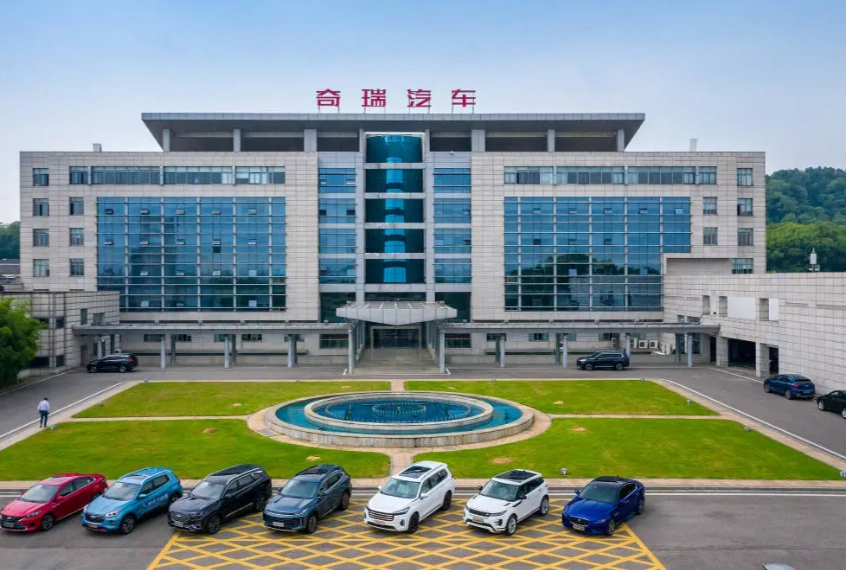
When Chery Group delivered an impressive report card of 280,128 vehicles sold in August 2026, up 15.4% year-on-year, what first jolted the capital markets and the auto industry was not the absolute scale of 280,000 vehicles, but the sharply divided "ice and fire" revealed deep within the data: monthly exports reached as high as 196,984 vehicles, swallowing a full 70% of total monthly sales with a frenetic growth rate of 52.1%, and its export growth rate was more than three times the overall market growth rate.
If this surge is simply attributed to an ordinary victory for China's manufacturing competitiveness globally, it would completely misread the fragmented endgame now unfolding across China's independent automaker camp—this export-oriented monthly explosion is essentially the strategic result of Chery shifting its vehicle production capacity and profit lifeline on a large scale toward offshore hinterlands amid a cutthroat price war in China's domestic new energy and fuel vehicle markets.
Domestic Slaughter and Overseas Premiums: The Underlying Logic of Mass Capacity Migration
As China's domestic passenger vehicle market enters a brutal stock-market battle, new forces and traditional giants alike have spread the fire of "same price for oil and electric" and even "electric cheaper than oil" from A-segment sedans all the way to mid- and large-size SUVs. Terminal channel price inversion, dealer inventory warning indices remaining high, and continuous per-vehicle discounts eroding reported gross margins have left every independent automaker clinging to the domestic battlefield miserable.
As a former "number one independent fuel vehicle maker," Chery has crammed in catch-up work in hybrid and pure electric fields in recent years, but to seize food from the tiger's mouth in the domestic market, it must endure extremely thin gross margin losses and nearly deformed marketing consumption. In overseas markets such as Russia, the Middle East, Latin America, and Southeast Asia, where mature foreign brands face supply gaps or remain priced high above the market, Chery relies on extremely high mechanical value for money, mature self-developed powertrains, and a long-established overseas distribution network. It can not only easily achieve sales velocity several times that of the domestic market, but also enjoy per-vehicle foreign-currency premiums that would be unimaginable at home.
Nearly Three Decades of Institutional Cards: 5.8 Billion Yuan in Capital and a Hong Kong Listing Marker
Following the underlying framework of commercial registration and capital evolution to penetrate the organizational foundation of this Anhui-based automotive giant, its institutional cards from nearly three decades of deep cultivation in Wuhu are clearly presented in Tianyancha data. Tianyancha business registration data shows that Chery Automobile Co., Ltd. was established in January 1997, with registered capital reaching approximately RMB 5.809 billion, legal representative Yin Tongyue, and registered address in the Wuhu Economic and Technological Development Zone, Anhui Province.
In Tianyancha's enterprise tags, not only are hard-tech barriers such as State Key Laboratory certifications clearly marked, but capital-market strategic markers such as a Hong Kong listing are also prominently listed.
A deep capital foundation of nearly RMB 6 billion and nearly three decades of overseas cultivation form the strongest backing for Chery to establish a monthly shipment defense line of 197,000 vehicles overseas.
As early as two decades ago, during the pioneering period when domestic peers were still expanding by enclosing territory at home, Chery, under Yin Tongyue's leadership, began the earliest experiments with CKD knock-down assembly and overseas plant construction. The enterprise qualifications and laboratory reserves accumulated through Tianyancha have witnessed its journey from the earliest self-developed engines and chassis durability testing to the huge overseas operating-condition engineering database it has now built for extreme high and low temperatures, high humidity, and unpaved roads in dozens of countries around the world.
This heavy-asset, self-built localized adaptive development system gives Chery landing agility several positions higher than those new energy upstarts that rush overseas to test the waters when facing harsh overseas environments and differentiated access certifications.
Hot Outside, Cold Inside: Structural Imbalance With Only 83,000 Domestic Deliveries in a Single Month
However, when the seemingly glamorous 280,000-vehicle total is pulled apart, the structural imbalance of "hot outside, cold inside" is sounding a hidden alarm for Chery.
Subtracting 197,000 overseas exports from the total monthly pie of 280,000 vehicles, Chery's actual deliveries in its home Chinese market in August were only about 83,000 vehicles. A manufacturing parent with monthly sales of less than 100,000 vehicles in the domestic market yet shouldering the heavy sales task of nearly 200,000 vehicles overseas—this severe tilt of "70% abroad, 30% at home" may cleverly bypass the suicidal domestic price war on paper, but it also fully exposes the company's systemic security to the guns of geopolitics and tariff trade barriers.
The dark clouds of high tariffs imposed by Europe and the United States on Chinese automobiles linger, and emerging markets are increasingly strict in reviewing vehicle import quotas and local manufacturing rates. Once major target export countries suddenly raise tariff thresholds to protect local industry or foreign exchange reserves, or if any geopolitical situation shifts, Chery's single-pole blood-making flywheel, which relies heavily on vehicle ocean shipping and offshore sales, will face an extremely severe risk of stalling.
Dual-Track Perils: The Clock Mismatch Between Fuel Exports Feeding New Energy Domestic Involution
A more delicate tug-of-war occurs in the meshing of two sets of gears running on different clocks: "export expansion" and "new energy transformation."
Another equally conspicuous set of figures in the announcement is that monthly sales of new energy vehicles reached 120,909 units, up 69.8% year-on-year, and have stood steadily above the 100,000-unit threshold for five consecutive months. On the surface, new energy penetration has exceeded 40%, but a deeper look at its product structure reveals that Chery's core main force currently dominating overseas markets remains highly reliable fuel SUVs and plug-in hybrids such as Tiggo and Jetour.
In most overseas countries that are not mature automotive consumer markets, the lack of charging and energy replenishment infrastructure determines that pure electric vehicles simply cannot become the mainstream volume driver locally in a short period.
This means Chery is in fact relying on the real money profits of high-margin fuel vehicles overseas to feed back at home its technology R&D expenses and the trial-and-error costs of the new energy price war.
This dual-track strategy has given Chery excellent financial resilience in the short term, but over the long cycle it has buried enormous organizational friction: the new energy matrix of Exeed, Zhijie, iCAR, and Fengyun is in the thick of domestic involution, with products and pricing fighting one another across multiple lines in the main RMB 100,000 to 200,000 band; while the overseas dealer network is still enjoying stable profits brought by traditional mechanical components and fuel powertrains.
If it cannot establish a localized new energy energy-replenishment ecosystem and intelligent electric brand premium overseas at the fastest possible speed, then the moat currently built by exporting fuel vehicles may at any time face the danger of being outflanked by Japanese, Korean, or local new forces as the irreversible wave of overseas electrification advances.
The Ultimate Test: From Exporting Cars to Taking Root in Capital and Technology
This miracle of nearly 200,000 vehicles going overseas in early autumn releases the most profound strategic dialectic to China's entire automobile manufacturing sector: going overseas is the antidote to escaping involution, but it is by no means a sanctuary where one can sit back and relax forever. With 70% of revenue coming from offshore markets, Chery has been passively transformed from a Chinese automaker with local state-owned capital backing into a multinational entity that must respond around the clock to global exchange rate fluctuations, geopolitical friction, and transnational supply chain compliance.
How to fully evolve foreign-trade-style "car export" into "capital going overseas, technology going overseas, and brands taking root," and while preserving high overseas profits also hold the high ground of technological discourse in China's intelligent new energy sector—this is the ultimate test Chery must answer well on its journey toward a capital market listing.