CATL's Asset-Light New Energy Probe and Zero-Carbon Harvest Play
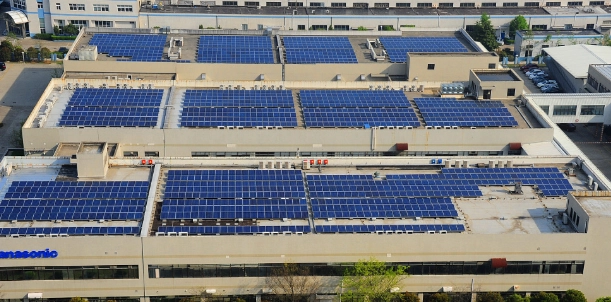
CATL has set up a company with registered capital of 2.56 million yuan, using an energy performance contracting model to deploy distributed solar and capture the long-tail premium of industrial green power.
As overcapacity anxiety in the new energy sector spreads across the entire upstream and downstream supply chain, CATL—once known for blindly ramping up production and dominating through sheer battery scale—is quietly shifting its aggressive posture in the physical world. Recently, an extremely small registered capital has peeled back the curtain on CATL's long-term blueprint for distributed energy consolidation in southern China's manufacturing hub.
A corporate registration announcement disclosed by Tianyancha shows that Huizhou Runxin New Energy Co., Ltd. has been officially established, with Dai Wei as its legal representative. This new entity, wholly owned by CATL subsidiary Times Green Energy Co., Ltd., has a registered capital of just 2.56 million RMB.
Most industry observers, accustomed to tracking CATL's billion-scale superfactory investment announcements and massive long-term orders from multinational automakers, tend to interpret the establishment of this Huizhou company as a routine regional solar project office or a box-checking exercise for green metrics in financial reports. This surface-level reading severely underestimates the systemic growth anxiety confronting CATL's core management team as pure battery hardware margins peak and global zero-carbon competition intensifies—and it overlooks their deeper strategy of using an exceptionally agile corporate shell to lock in long-tail premiums from industrial green power.
To decode the true intent behind CATL's micro-scale scalpel, one must see through the seemingly thin corporate registration surface. Details disclosed by the Tianyancha App show that within the clearly registered business scope, alongside standard solar power generation technical services and emerging energy technology R&D, the truly lethal core business anchor is precisely locked onto the six characters: "Contract Energy Management".
The registered capital of 2.56 million RMB creates an extraordinarily stark contrast with CATL's trillion-yuan market capitalization. This pocket change—less than a top executive's annual salary—is not meant for heavy-asset investments like solar panel installations or large-scale infrastructure in Huizhou. Rather, it represents a lightweight commercial hub and microgrid dispatch probe that CATL is force-welding outside its main corporate body.
The real battle in the commercial and industrial energy storage and new energy market has long moved past the early stage of competing solely on cell energy density and cycle life. Huizhou, as the Greater Bay Area's core electronics manufacturing and petrochemical heavy-industry heartland, is dense with major power consumers. Squeezed by stringent carbon emission caps and peak-valley electricity price differentials, these companies' rigid demand for green power is exploding. Through this exceptionally lightweight joint-venture shell, CATL is essentially bypassing traditional power trading giants to reach directly into the distribution rooms of these manufacturing plants.
This is the cold, hard logic of contract energy management. CATL is no longer just a bottom-tier hardware supplier selling batteries—it is transforming into a top-tier operator of zero-carbon solutions. Backed by the financial guarantees of its parent entity Times Green Energy, this 2.56 million RMB shell company can rapidly secure a wave of rooftop solar-plus-storage projects at factories across Huizhou. CATL provides the equipment and technology, factories provide the space, and both sides share in long-term profit from reduced electricity costs and green power credits.
Through this extreme resource-control strategy, CATL can not only channel its vast commercial and industrial energy storage battery capacity into targeted deployment, but also—without exposing the parent company to significant cash flow risk—secure scarce grid interconnection nodes and industrial customer resources across southern China at minimal trial cost. Once a regional solar-plus-storage microgrid model proves viable, the long-tail cash flow returns and carbon asset premiums will flow steadily back into CATL's profit pool. Even if individual projects encounter local administrative approval friction or payment defaults, the maximum financial depreciation remains tightly capped behind a single-digit million-yuan firewall.
The second half of the new energy civil war has long moved past the crude era of blind expansion and land-grabbing. When hardware manufacturing margins are squeezed to the limit, the ultimate test of an oligarch's survival capability is whether it can transcend physical hardware boundaries and, through exceptionally agile business models, hard-control the flow of energy dispatch across society. This 2.56 million RMB micro-chip in Huizhou is nothing less than a clear industry consolidation signal—CATL doesn't just build hearts; it intends to use the most hidden, most lightweight veins to monopolize the underlying energy lifeline of Greater Bay Area industrial manufacturing.