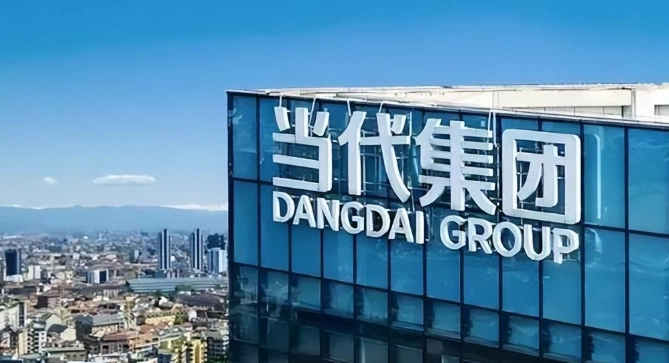
Capital Utopia's Final Reckoning: Wang Lingling Steps Forward to Clean Up Contemporary Oriental's Mess
After Contemporary Oriental was delisted, its actual controller Wang Lingling took over as chairwoman, personally managing the bankruptcy reorganization to deal with hundreds of millions in bad debts and lawsuits.
When the spotlight completely shifts away from those delisted, bankrupt capital castoffs, the finish line of the capital marathon is often crossed in the most unremarkable business registration changes. Recently, Contemporary Oriental Investment Co., Ltd. underwent a drastic personnel overhaul. Shi Liang stepped down from the chairman's seat, and Wang Lingling, the soul core and ultimate controller of the Xiamen Contemporary Group, personally took over, with multiple key personnel also being cleared out simultaneously.
For Contemporary Oriental, which was ordered to be delisted by the Shenzhen Stock Exchange in 2022 and subsequently plunged into the quagmire of bankruptcy restructuring, this shift in legal authority is by no means a capital legend of a veteran making a comeback to seek relisting, but rather a moment of reckoning where a once-arrogant dynasty, having fully drained the benefits of cross-industry speculation, sees its family core forced to personally confront and settle the messy accounts at the bargaining table.
Looking back at the capital myth-making campaigns of that era, Contemporary Oriental's predecessor was nothing more than a loss-making Datong Cement Plant in Shanxi Province. It wasn't until the Xiamen Contemporary Group took control and, amid the subsequent bull market frenzy, clumsily stitched it into the glamorous film and television culture track. That was an absurd era where simply acquiring IPs and investing in blockbuster dramas could easily push a company's market value past the ten-billion-yuan mark. By acquiring Mengjiangwei Film & TV, pouring heavy funds into major productions, and laying out a national cinema chain, Contemporary Oriental once became the most cash-attracting film and television giant on the market. However, a castle in the air lacking underlying industrial cash flow generation was ultimately destined to erode rapidly under the weight of cyclical forces. With the onset of the film and television industry's deep freeze and the brutal margin calls on leveraged funds, the once-dominant Xiamen Contemporary Group collapsed entirely.
Flipping through the updated corporate profile on Tianyancha, the business scope now left behind presents a suffocating sense of absurdity: engaging in investment activities with self-owned funds, mining rights evaluation services, real estate appraisal, and real estate brokerage. From a cultural giant holding international film and television IPs to a hybrid shell now dabbling in mining and industrial evaluations and real estate agency, the massive registered capital of 790 million yuan tenaciously clings to the last few lifelines Contemporary Oriental could grasp during its historical restructuring. The remnants of the old industrial base from the Datong Cement era, combined with the property leftovers from the Contemporary Group's speculation in cinema real estate, have pieced together this mishmash of a degraded corporate entity.
In this shift of core governance authority, the underlying interest-chain reason for Shi Liang's exit and Wang Lingling's move to the forefront lies in the complete failure of the caretaker model in the face of long-standing bad debts.
Post-delisting, Contemporary Oriental did not find peace but instead found itself mired in hundreds of millions of yuan in recovery lawsuits and a black hole of financial assistance provisions written off as bad debts. The substantial assistance funds, totaling hundreds of millions of yuan, extended to affiliated cinemas remain unrecoverable, and various lawsuits remain entangled. In this extremely murky judicial meat grinder, the externally hired Shi Liang had clearly lost his value as a continuing shield. Wang Lingling, as the ultimate controller of the Contemporary Group, has directly welded her name onto the chairman's position in the Tianyancha registration changes. Essentially, this is the Wang family's move to staunchly defend the few remaining residual assets from being completely carved up by external creditors during the final settlement period of bankruptcy restructuring, leveraging the highest legal authority.
The evolution of business has always been ruthless, and delisting is by no means the end. What Wang Lingling is taking over now is not a scepter to reforge an empire, but a cold, debt-laden bill smeared with the mud of multi-party struggles that she will have to spend the rest of her life clearing and fighting over.