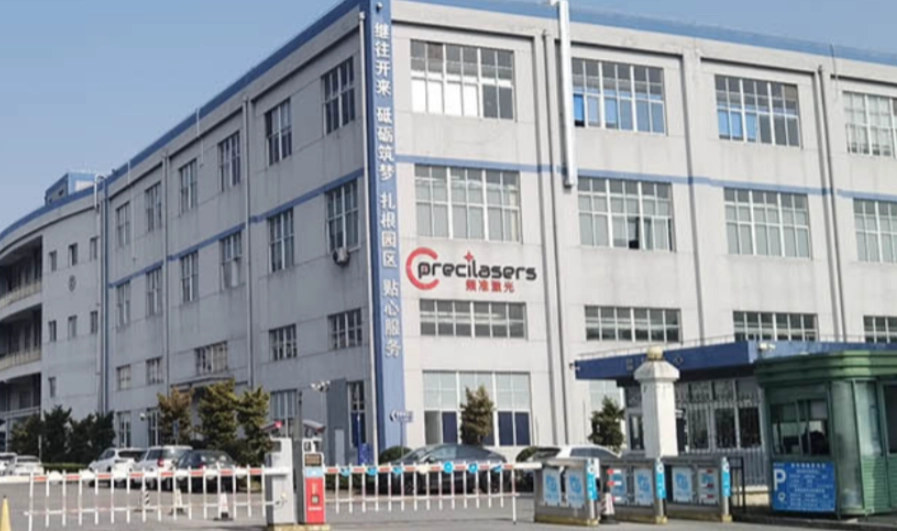
The 550K paper gain reveals extreme premium capital places on scarce domestic optics, with Frequency Laser expanding from seven to 519 employees in seven years, yet high valuation conceals betting risks.
When a newly listed stock on the STAR Market can deliver paper gains of more than 550,000 yuan per lot for lucky subscribers on its very first day of trading, this almost irrational wealth-creation myth cannot be explained away simply by new-stock speculation sentiment. In a primary and secondary capital market that is otherwise cooling overall, the violent surge of up to 595% in the share price of Pinzhun Laser directly exposes the underlying reality of the secondary market's extreme hunger for core hard tech at the foundational level.
This is not just a carnival for original shareholders and new-stock subscribers; it is the extreme premium that the entire capital circle is being forced to pay for the scarcity of domestic precision optics and semiconductor upstream equipment.
In the ebb tide of internet and business-model innovation, capital's instincts are extremely opportunistic and cold-blooded. It no longer pays for illusory traffic stories but instead pours ammunition into heavy-industry tracks capable of solving key bottlenecks in mother machines for industrial manufacturing. Optical instruments and precision lasers are precisely the heart of lithography machines, high-end measurement equipment, and precision semiconductor processing.
The fact that Pinzhun Laser can claim the crown of the most expensive new stock of the year is essentially the market buying a safety hedge against a potentially disrupted overseas supply chain. What capital is frantically flooding into is the physical piece of the puzzle that China's high-end manufacturing urgently needs to fill in the face of external technology blockades.
Explosive Scale Growth: A Heavy-Asset Leap from 7 to 519 People
Following this wave of capital frenzy to examine the underlying expansion trajectory, the explosive growth in corporate scale reveals the brutal rules of hard-tech commercialization. According to the business registration and social security records archived by Tianyancha, this company, founded in 2017, saw its number of insured employees surge from just 7 at the outset all the way to 519 by 2025. Within the business scope documented by Tianyancha, optical instrument manufacturing and technology import/export are firmly anchored as the core operations.
The expansion from an initial workshop of just 7 core R&D personnel to an entity of more than 500 people is by no means the sales-force expansion typical of a light-asset company; it is the capacity gap that precision manufacturing companies must cross to go from laboratory prototypes to industrialized mass production.
Behind those hundreds of newly added employees are cleanroom production lines that devour massive amounts of capital, along with process engineers grinding day and night to squeeze out marginal improvements in yield rates. The moat of hard tech has never been a few academic papers; it is the yield rate hammered out by hundreds or thousands of highly paid technical workers and massive R&D budgets. Pinzhun Laser has completed its heavy-asset leap from a small research team to a scaled manufacturing entity in seven years. Against the current extremely high valuation on the STAR Market, that initial registered capital of 30 million yuan reflects the real and substantive restructuring of the entire domestic laser supply chain over the past several years.
Hidden Dangers Beneath the High Valuation
However, measuring the value of an upstream equipment maker by 550,000 yuan in first-day paper gains is a pricing mechanism that borrows heavily from the future and carries its own hidden dangers. When extreme scarcity is forcibly monetized by capital through daily price limits, the company loses its strategic buffer period to develop quietly behind the scenes. Established international optical giants will certainly not sit idly by while a domestic upstart uses its ultra-high market capitalization to fund R&D in a reverse cycle.
Going forward, the challenge for Pinzhun Laser is no longer whether it can build the product, but how to preserve its bargaining power in the supply chain when international oligopolies may launch price dumping campaigns or next-generation technology offensives at any time.
This record-breaking return on a new stock is the highest praise from the capital markets for the phased breakthrough in domestic substitution, but it is also an extremely heavy bet. In the unforgiving arena of precision manufacturing, where the tolerance for error is extremely low, a high valuation is never the finish line. If the pace of capacity ramp-up and iteration of underlying process technology cannot keep up with the bubble blown by capital, the most expensive new stock being carried to the altar by frenzied funds today will have to face the market's most ruthless value reassessment tomorrow.