Capital Group is placing a 3 billion yuan bet on Daxing, building a heavy-asset platform for subsidized rental housing while taking on inventory absorption and plotting an REITs exit.
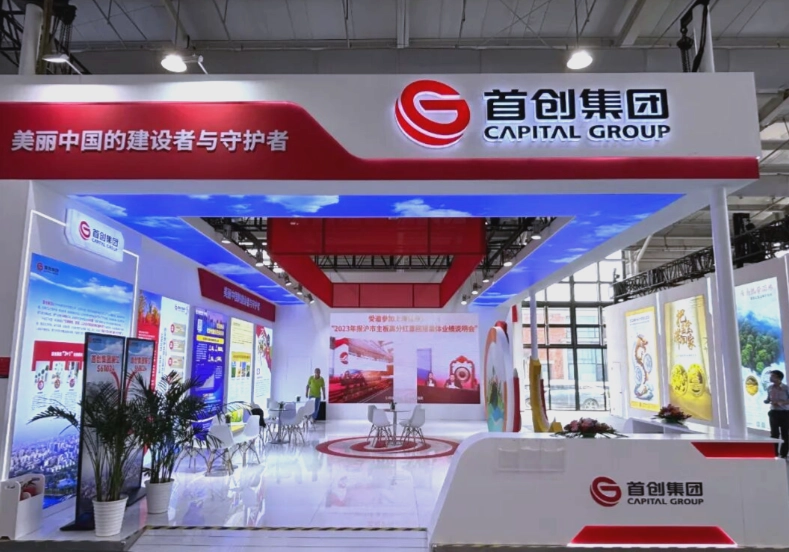
At a time when nationwide commercial housing sales have entered a long bottoming-out period and the traditional high-turnover residential model has completely failed, Beijing municipal state-owned enterprise Capital Group has placed a striking heavy bet in the heart of southern Beijing. Three billion yuan in truly paid-in registered capital is by no means a routine move to set up an intermediary or property management operating platform, but rather an extraordinarily ambitious asset reshuffling experiment by a hundred-billion-level state-owned capital flagship at the intersection of local debt resolution and the policy dividends for subsidized rental housing, aimed at revitalizing dormant far-suburban land and inventory assets.
Equity Penetration: A Heavy-Asset Layout Split 60-40
Tracing the origins and destinations of this huge sum through the underlying business equity structure, the capital considerations of its top-level design are clearly revealed in Tianyancha records. Tianyancha business registration data shows that Capital Housing Leasing (Beijing) Co., Ltd. was recently formally registered in Daxing District, with Wang Wei as legal representative and registered capital as high as 3 billion yuan. Its approved business scope not only covers housing leasing and non-residential real estate leasing, but also extends across the entire chain of hotel management and property management.
The more critical subtlety lies in the shareholder structure: Beijing Capital City Development Group Co., Ltd. holds 60%, while Beijing Capital Group Co., Ltd. directly holds 40%.
The group parent and its specialized real estate subsidiary jointly taking a heavy position at a 60-40 ratio completely breaks the previous convention in which real estate developers used only tiny amounts of capital in the tens of millions to test the waters of asset-light operations.
The 3 billion yuan registered capital directly punctures outside speculation that it is merely acting as a second landlord in asset-light entrusted management. Under traditional business logic, a company engaged purely in property management and subleasing would simply not need billions of yuan in net assets as a backstop. The fact that this huge sum of capital has been pushed directly to the forefront means that from the moment of its birth, this entity has carried the core mission of heavy-asset acquisition and accumulation.
The choice of Daxing precisely hits the real pain points of the Beijing South Daxing International Airport economic zone and the cluster belt of industrial parks. Across this vast far-suburban area, a large number of existing properties originally planned for commercial housing or mixed commercial-office complexes are mired in sales difficulties amid the current sluggish destocking cycle, becoming idle assets that devour the group's financial expenses.
Policy Undertaking: A Capital Reservoir for Converting Inventory into Subsidized Rental Housing
The newly established housing leasing platform is precisely the dedicated capital reservoir through which Capital undertakes the national stockpiling policy and converts slow-selling commercial housing and idle commercial-office assets into subsidized rental housing.
Through the large equity funds directly injected by the group, the new entity has sufficient capital strength to leverage extremely low-cost long-term special loans for subsidized rental housing from financial institutions, and then acquire at compliant valuations the stagnant inventory projects under the parent company or within the region. This precise left-hand-to-right-hand move can not only directly deliver precious cash flow to recharge the originally liquidity-strained development segment, but also switch hard-to-realize sales inventory with one click into a subsidized rental housing asset package supported by national tax reductions and policy interest subsidies.
Capital Closed Loop: The Ultimate Plan for Exit via Public REITs
An even more far-reaching plan points to the finish line of the capital market closed loop: public REITs. At a time when commercial real estate lacks buyers, public REITs for subsidized rental housing are one of the few avenues specially supported by regulators that can achieve full securitization and exit for large-scale assets. Capital's construction of a 3-billion-level heavy-asset leasing platform is essentially polishing in advance an asset pool that meets the issuance standards for underlying assets, enhancing rent collection rates and space efficiency through professional property operations, and ultimately relying on the capital market to make a clean exit.
However, behind the rosy vision also lies the harsh reality of crunching the numbers. The real rent affordability of industrial workers in Beijing's far suburbs is relatively limited. If, after asset restructuring, the actual annualized net rental yield of the underlying properties cannot outperform financing interest and asset depreciation costs, then this 3 billion yuan of heavy assets deposited in Daxing could easily mutate from a life-saving reservoir into a new point of financial bleeding.