Youjia tissue recall exposes the quality-control collapse of asset-light OEM production, where capital backing fails to avert safety crises, warning that marketing cannot replace manufacturing standards.
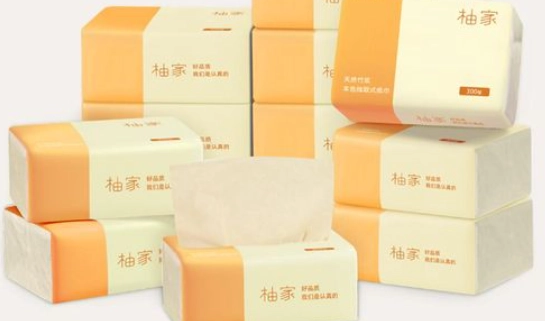
When the Shanghai Municipal Market Supervision Administration issued a recall notice for Youjia kitchen paper towels, flagging excessive acrylamide levels, public panic spread rapidly across social platforms. As a high-frequency consumable that comes into direct contact with cooked food and absorbs grease and moisture, kitchen paper with potentially carcinogenic substances exceeding limits is far from a simple quality inspection accident. This incident directly shattered the quality myth woven in recent years by tech giant ecosystems, new consumer aesthetics, and domestic brand alternatives, laying bare the quality control failures of asset-light OEM models when they venture into the deeper waters of traditional manufacturing.
In the daily consumer goods sector, kitchen paper has a far higher industrial threshold than ordinary tissue. To achieve the physical properties of remaining intact when wet and being safe for direct food contact, chemical additives such as wet strength agents must be added during production. However, inferior additives or substandard high-temperature reaction processes can easily lead to excessive residual monomer acrylamide levels.
In today's fast-moving consumer paper market, where price wars are fought down to fractions of a cent in profit margins, upstream contract manufacturers, eager to cut costs, are highly prone to cutting corners on invisible chemical additives and raw material controls. When safety hazards hide at the microscopic molecular level that cannot be detected by the naked eye, internet-native brands lacking heavy manufacturing DNA often remain completely unaware.
The Fragility of the Asset-Light Model
Peeling back the glamorous veneer of this new consumer brand to examine its underlying commercial structure reveals the fragility of its asset-light operations in full view. Tianyancha business registration data shows that the involved Shanghai Youjia Technology Co., Ltd. has a registered capital of only approximately 1.852 million RMB, with its business scope strictly limited to circulation segments such as paper product sales, personal hygiene product sales, and textile product sales. In the equity structure disclosed by Tianyancha, in addition to founder Jiang Hua, Xiaomi Group's Tianjin Jinmi Investment Partnership and institutions under Shunwei Capital are prominently listed.
This chain of capital endorsements with distinct internet DNA clearly traces the company's origins: leveraging the traffic ecosystem and brand endorsement of tech giants to quickly open up sales channels, while completely outsourcing the heaviest, dirtiest, and most mission-critical manufacturing processes to external contract factories.
Empty Standards Behind the Professional Halo
What makes this even more ironic is the professional halo this company carries. Intellectual property information recorded by Tianyancha shows that Youjia participated in drafting multiple existing enterprise standards, including those for surface wipe cloths. In commercial competition, participation in drafting standards is often packaged by new consumer brands as evidence of their industry influence.
However, once a brand itself lacks penetrating oversight of its entire supply chain, these standards written on paper degenerate into hollow promotional props. When a new consumer representative bearing the label of a standards drafter and backed by top-tier capital crashes spectacularly on the most basic food-contact safety line, it reflects the systemic failure of the entire OEM model driven by profit incentives.
Traffic Halo Cannot Replace Industrial Bottom Lines
The traffic halo of tech giants can easily create bestsellers, but it cannot shield a brand from the chemical penetration of substandard raw materials. For new consumer brands heavily dependent on OEM manufacturing, if all energy is poured into appearance design, co-branded marketing, and channel distribution, while lacking substantial testing safeguards for factory raw materials and chemical processes, any minor supply chain failure can evolve into a devastating brand catastrophe.
This recall crisis involving kitchen paper towels sounds an alarm for all players enamored with asset-light models and quick monetization: in the physical consumer product track that affects public health and life, anyone who vainly attempts to replace stringent industrial manufacturing standards with marketing concepts will ultimately pay an extremely painful price under the dual judgment of regulators and the market.