Model Enclosure in the Physical World: The Real Ambitions Behind ByteDance and SAIC's Joint Investment in 'Autonomous Variables'
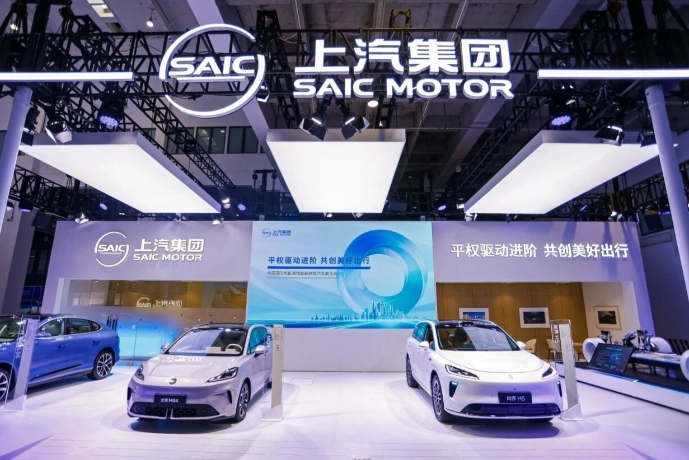
ByteDance and SAIC Group have jointly invested in Autonomous Variables Robotics, revealing the strategic layout of tech giants in embodied intelligence, focusing on physical world models and software-hardware integration.
When internet traffic giants and traditional automaking behemoths meet on the same startup's shareholder roster, this cross-industry convergence instantly strips away the veneer of warmth from the embodied intelligence track. Tianyancha App shows that Zibianliang Technology (Shenzhen) Co., Ltd., the entity associated with Zibianliang Robot, has recently brought in ByteDance's Beijing Quantum Leap Technology, as well as SAIC Motor's Shanghai SAIC Chuangyuan Venture Capital Partnership, as new shareholders. This movement of nominal capital is, at its core, the domestic sovereign settlement for this startup founded by PhDs from Tsinghua and the University of Southern California, following a surge in valuation.
Looking at the deeper causes, the joint positioning by ByteDance and SAIC reveals the coldest shift in AI investment logic in early 2026: purely virtual language and vision-based multimodal large models can no longer sustain the narrative of excess arbitrage once screen traffic hits its ceiling. Zibianliang founder Wang Qian's earlier core argument is becoming reality — the embodied intelligence model is not a minor application of multimodal models, but a completely independent physical world foundation model running parallel to the virtual world. The randomness of the physical world causes algorithms distilled from virtual text to frequently fall into logical paralysis when faced with real end-to-end operations. ByteDance needs this fully end-to-end physical large model to scout out a reliable brain for its future embodied applications and robotic hardware; meanwhile, SAIC, as a representative of heavy industry, faces the ironclad demands of intelligent connected vehicles evolving toward higher-level embodied entities, as well as the future outsourcing of unmanned factory processes.
This complementarity in the chain of interests shatters the industry's dismissive consensus that major tech companies building robots is just a PR stunt. In April this year, Zibianliang Robot announced that its new generation robot interns would be deployed to real households in the first batch. This approach of throwing robots directly into real environments means an immense hunger for data. ByteDance possesses terrifyingly comprehensive multimodal data assets and cloud computing power across the entire internet, capable of providing Zibianliang with a surging data flywheel; SAIC, on the other hand, can offer hardware sovereignty and trial-and-error scenarios ranging from precision motors and reducers to large-scale mass production and delivery. This forced stitching together of software and hardware capital is the most rational asset hedging that major companies can undertake when facing dual anxieties over computing power and hardware.
From the equity structure revealed by Tianyancha's penetration analysis, it's clear that the fragmented injection of major corporate capital reflects the founding team's sobriety in defensive security planning. Wang Qian is well aware that embodied intelligence large models cannot be replicated through simple copying or distillation like traditional open-source models; the coupling between hardware and physical environments requires them to grind away at the most fundamental layers of materials and algorithms. Bringing in ByteDance and SAIC is essentially exchanging a small portion of equity for two long-term tickets into the traffic arena and the industrial manufacturing line.
As this latest business registration change is finalized in Tianyancha's archive database, any robot lacking a closed loop between software and hardware will be swiftly swept off the historical stage under the dual crushing force of major corporate capital and hardcore supply chains. In this iron-blooded battle over sovereignty of the next-generation physical world, Zibianliang has already secured the heaviest chips.