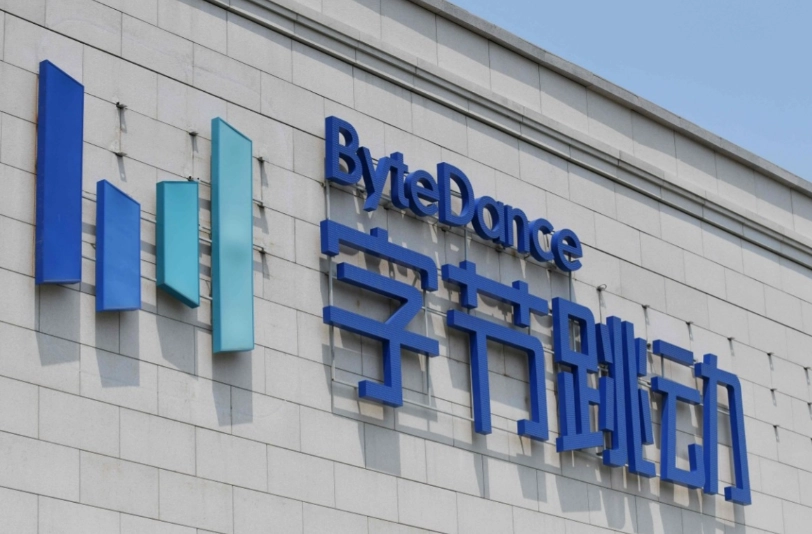
ByteDance Invests $100M in Southwest Gateway: The Southeast Asia Computing and Overseas Expansion Hub Behind Mohan
ByteDance registers Kunming company with 700 million yuan to develop Mohan port, building a Southeast Asia computing and e-commerce hub, pivoting to digital infrastructure.
When internet giants see their growth ceiling in China's first- and second-tier cities, they turn their gaze toward overseas expansion and border hubs — and capital flows are often more honest than PR statements. Beijing Zitiao Network Technology Co., Ltd., wholly owned by ByteDance, has poured a full 700 million RMB in registered capital into Kunming, establishing Kunming Beiye Data Intelligence Technology Co., Ltd. Outsiders tend to dismiss such cross-regional registrations as routine regional branch operations. But if you zero in on the registered address of this new entity — the Digital Economy Industrial Park in the Fenced Port Area of the Mohan–Boten Cooperation Zone — the true weight of this move becomes clear: This is no ordinary second-tier city R&D center. It is a strategic digital bridgehead ByteDance is building to hard-wire its sprawling cross-border e-commerce and computing network directly into the throat of Southeast Asian trade.
Mohan and Boten, as core hubs on the China–Laos Railway and China's land gateway to the Indochina Peninsula, have shouldered the mission of opening up to ASEAN since being placed under Kunming's administration. Over the past two years, TikTok's e-commerce business across Southeast Asia has grown at breakneck speed. But in stark contrast to the explosion of online transactions, the underlying support systems — cross-border data transmission, multilingual model computation, digital supply chains, and localized fulfillment and settlement — have lagged behind.
To hold onto its first-mover advantage in what is now the world's most fiercely competitive e-commerce and content blue ocean, the giant must deploy a carrier hub in the region with the shortest physical distance and lowest network latency to Southeast Asia — one capable of linking domestic and overseas computing power and transaction pipelines.
Following the underlying commercial architecture to dissect this new company's chassis, the strategic intent it shoulders is unmistakable. The corporate records captured by Tianyancha show that Kunming Beiye Data Intelligence Technology Co., Ltd. not only carries a registered capital of 700 million RMB — wholly owned by Beijing Zitiao Network — but its business scope precisely covers hardcore IT domains including software development, information system integration services, and retail of computer software, hardware, and peripherals.
The full suite of IT credentials and the pure equity structure captured on Tianyancha make clear this is not a lightweight asset shell designed to manage local business relations. It is a substantive entity with the capacity for heavy capital throughput and heavy-duty technology system integration.
Parking such a massive capital base directly in the fenced port area signals a precise play for policy dividends and cross-border data trade. Under the institutional framework of free trade zones and cross-border economic cooperation zones, the Digital Economy Industrial Park enjoys unique special channels for compliant cross-border data flows, offshore settlement, tax incentives, and duty exemptions on imported and exported equipment. By establishing this large-scale entity, ByteDance not only gains direct access to Yunnan's abundant clean green electricity to power its computing clusters, but also leverages the port corridor advantage to radiate its cloud computing services and algorithm scheduling capabilities into Southeast Asia at minimal physical distance and infrastructure cost.
From sweeping overseas markets with lightweight algorithms in the early days to pouring real money into heavy digital infrastructure along the national border, the overseas playbook of these giants is undergoing a profound transformation. In a stock-cycle era where virtual applications alone can no longer secure a defensible position, whoever can physically bind algorithms, computing power, and cross-border trade corridors earliest will hold the real trump card in the complex game of international trade.
This 700-million-yuan bet silently declares that ByteDance's second-half strategy in the Southeast Asian arena has fully shifted — from pure traffic competition to deep control of the underlying digital arteries.