BOE injects 900 million yuan into materials subsidiary to break overseas monopoly in display materials, securing proprietary formulas and supply chain sovereignty.
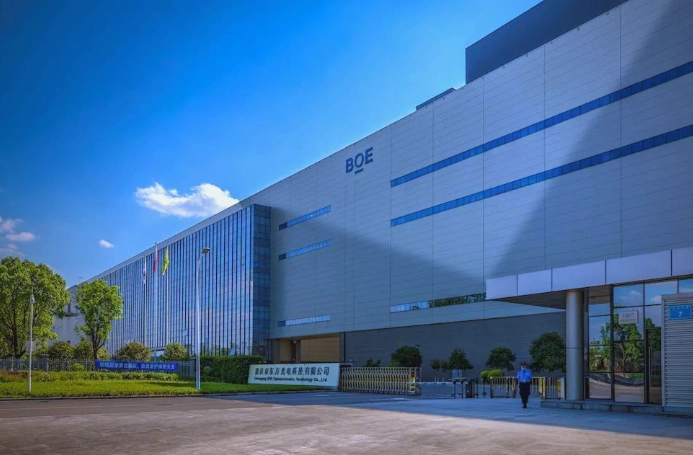
As the global display industry grinds through a zero-sum battle for market share, screen giant BOE is pouring heavy capital into the industry's deepest layers. Tianyancha App shows that Beijing BOE Materials Technology Co., Ltd. recently underwent a business registration change, with its registered capital surging from 520 million RMB to 920 million RMB, an increase of approximately 77 percent. This capital injection sends a strong signal that BOE is attempting to restructure its profit foundation and seize control over electronic materials.
The subsidiary was established in August 2024, with its business scope focused on new materials R&D and the sale of electronic specialty materials. The logic driving this rapid capital increase is both stark and urgent: although BOE reigns as the global leader in panel shipments, in the unforgiving distribution of profits, it has long paid a hefty monopoly premium for upstream materials.
Panel manufacturing is, at its core, a super assembly operation defined by heavy capital, high depreciation, and extreme vulnerability to cyclical downturns. The real excess profits in the industry are captured by the light-emitting materials, photoresists, and high-purity electronic chemicals hidden behind the screens. These foundational technologies have long been locked up by overseas giants. For every high-end screen BOE sells, a significant portion of its gross margin must be surrendered. In the 2026 global trade environment, this heavy reliance on external supply chains is not just a looming cost black hole, but also a potential safety hazard that could trigger production halts at any moment.
The nearly one-billion-yuan asset base visible through Tianyancha represents a defensive move by BOE's leadership after recognizing the industry's endgame. Wang Zhenyu's materials division is throwing money at the laboratory to achieve independent process substitution for critical materials. When a panel giant begins to build its own materials R&D matrix, it ceases to be a pure hardware integrator and becomes a technology entity seeking sovereignty over material formulations.
Conventional wisdom overlooks the unique formulation barriers of the display industry. The development of display materials relies heavily on real-time feedback and data from downstream panel production lines. As the world's largest consumer of panels, BOE itself is a natural testing ground. When its in-house materials company develops new formulations, they can be directly fed into its own production lines for high-frequency prototyping and testing. This closed-loop synergy is an efficiency privilege no independent third-party company could ever hope for.
The driving force behind this value chain also stems from BOE's own premiumization strategy. As automotive displays and high-end panels shift toward dual-stack tandem structures across the board, the volume and quality demands on materials are growing exponentially. If BOE fails to seize the leading position at this technological inflection point, its investments will ultimately serve as nothing more than a conduit enriching overseas materials suppliers.
The endgame of commercial competition has never been about who assembles the largest modules, but rather who digs the deepest moat in the microscopic world. The record of this major capital increase left by BOE on Tianyancha is a hard-nosed bill for digging for gold inward. In this hardcore race where chemical formulations define the truth, only by pouring capital fastest and heaviest into the most fundamental layers of matter can a company truly hold its own lifeline in the industry cycles to come.