Billions in the Gobi: The 58.1 Billion Yuan 'Inner Mongolia Power to Jiangsu' Deal and the Local Struggles Behind It
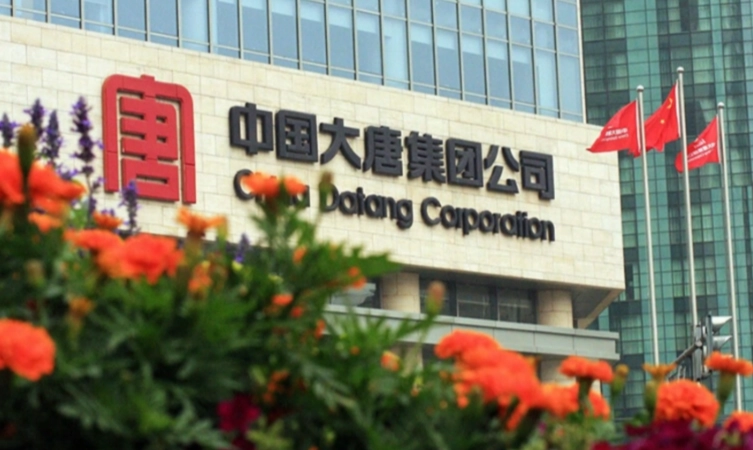
Datang, together with Jiangsu Guoxin and Ordos state capital, formed a multi-billion-yuan energy company to advance the 58.1 billion Yuan 'Inner Mongolia Power to Jiangsu' ultra-high-voltage project, aiming to cope with transition pressures and secure renewable resources in the west.
When the vast Gobi and desert hinterlands of Inner Mongolia are fully covered by rows of blue photovoltaic panels and white wind turbines, a registered capital of ten billion yuan has landed with a resounding thud in Ordos, formally raising the curtain on the capital phase of the largest single-site cross-provincial ultra-high-voltage (UHV) transmission project in the country, slated for mid-2026. According to the Tianyancha App, Datang (Ordos) Energy Development Co., Ltd. was officially established recently, with Xu Jiayu serving as its legal representative and a registered capital reaching an eye-popping 10 billion yuan.
This 10-billion-yuan registration, which directly tops the industry ceiling, covers a business scope that includes wind power generation, solar power generation, and energy storage technology services. However, a closer look at the multi-party shareholder structure revealed by Tianyancha shows this is by no means a routine green power project following the herd. The placement of this 10-billion-yuan capital is, in fact, a super investment vehicle and industrial bulwark jointly built by Datang Power, Jiangsu Guoxin Group, and Ordos New Energy Development and Utilization Co., Ltd. for the "Inner Mongolia Power to Jiangsu" wind-solar-storage integrated UHV transmission project, with a total investment of up to 58.1 billion yuan.
The shallow consensus widely circulating in the industry holds that power central state-owned enterprises setting up energy companies in the northwest is merely a response to the policy call for Gobi and desert large-scale bases, with a side of land grabbing. This kind of technically correct platitude completely underestimates the survival gravity facing major energy conglomerates, caught between the heavy pressure of thermal power transition assessments and the full implementation of market-oriented pricing reform for new energy electricity.
For controlling shareholder Datang Power, traditional coal-fired units still account for more than half of its installed capacity, and the substance of its structural adjustment faces stringent market-based reckoning. At the technical inflection point of "computing-power-electricity synergy" and cross-provincial UHV grid integration, Datang urgently needs to pour into new energy at the fastest possible speed. By bringing on board state-owned capital from both the sending and receiving ends, it directly locks in the formidable rights to 4 million kilowatts of wind power and 8 million kilowatts of solar power. The deeper driver of the profit chain lies in the fact that registering a 10-billion-yuan entity locally is essentially a lever to compete for lead development rights over other large-scale energy bases in Inner Mongolia down the road. This is a textbook strategic redeployment that uses heavy-asset dividends to offset its own shortfall in the new energy share.
The shrewdness of this cross-border joint venture among central state-owned enterprises, local state-owned capital, and a receiving-end province lies in its almost textbook-perfect interlocking of the profit chain.
Tianyancha's equity trail shows that, in addition to Datang holding 51 percent of the shares, Jiangsu Guoxin and Ordos New Energy each take 34 percent and 15 percent, respectively. Jiangsu, as an economically strong province with extremely high electricity load and scarce local resources, gains a rigid layer of stability for its long-term power supply by taking an equity stake in upstream generation; Ordos local state capital, meanwhile, contributes land and planning coordination rights in exchange for long-term tax revenue and profit sharing. This closed-loop model of joint development by sending and receiving ends, with targeted backing from the local state-owned platform, builds a financial firewall against risks from market-based electricity price volatility.
The evolution of business and industry has always been ruthlessly unforgiving. In the 2026 battlefield, where the endgame is defined by grid feed-in tariffs, transmission capacity, and real cash-generation efficiency, asset-light green power startups reliant on weather patterns and lacking long-term receiving-end customer connections will ultimately be exposed under the listing gravity of heavy-asset giants.
The latest 10-billion-yuan partnership coordinates left in the Tianyancha records by Datang and Jiangsu Guoxin are a sobering invoice for the construction of cross-provincial energy arteries in an age of great voyages. In this iron-blooded competition, where resource density and channel control determine the outcome, whoever can first shore up the foundation with 10-billion-yuan-scale financial heavy artillery will be the first to secure a perpetual cash-generation ticket to the next clean energy cycle amid the existing-stock storm of the Gobi and desert expanses.