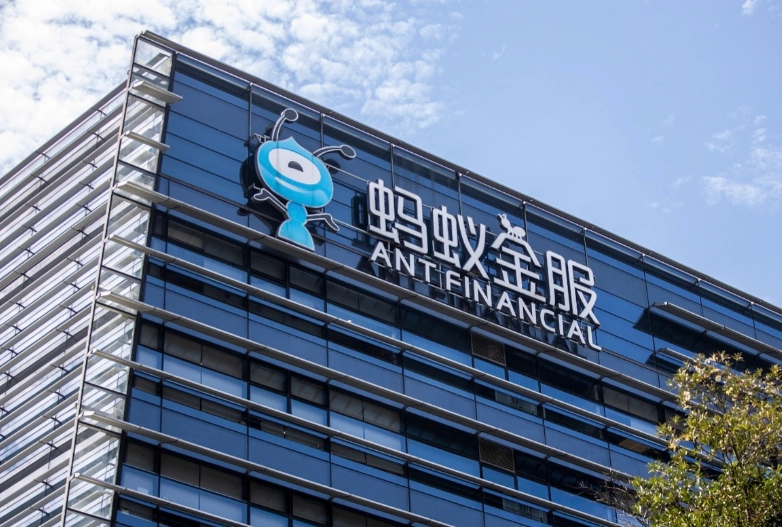
Ant Group Sets Up Shanghai Zhibao Tech with 10 Million Yuan: Compliance Firewall and B2B Technology Outreach
Ant Group registers Zhibao Tech with 10 million yuan, focusing on compliance isolation and B2B digital services, targeting the enterprise market.
As internet giants shift from rapid platform expansion to deep engagement in vertical enterprise services and refined regulatory compliance, every industrial and commercial move in a core city serves as a micro-level snapshot of their massive business machinery undergoing self-deconstruction and functional reorganization. Ant Group has wholly established Shanghai Ant Zhibao Technology Co., Ltd. with a registered capital of 10 million yuan. While this capital amount cannot compare to the heavy infrastructure entities with billions in investment, this seemingly lightweight investment nevertheless sharply reflects the tech giant's agility in advancing business decoupling, isolating operational risks, and capturing opportunities in the long-tail of B-end digital services.
Having undergone rigorous compliance scrutiny, Ant has long moved past the era of cramming all businesses into a single super-entity. Under the current governance logic, licensed financial businesses, foundational technology, and enterprise-level operational services for vertical scenarios are now forcibly separated with clear physical barriers. Spinning off single-function businesses into independent legal entities not only shields the parent company from collateral risks arising from friction in peripheral businesses at the financial and legal levels, but also enables flexible governance structures that hold independent teams accountable for market-driven profit and loss.
License Portfolio: Deep Signals from HR and Value-Added Telecom
Tracing the new company's true mission through its business scope reveals a telling combination at the foundational level. Tianyancha industrial and commercial data shows that Shanghai Ant Zhibao Technology Co., Ltd. is wholly owned by Ant Technology Group, with a business scope that covers not only routine technology development and software services, but also prominently includes human resources services and Class II value-added telecommunications services. This combined license portfolio recorded on Tianyancha indicates that this new entity is far from a pure algorithm R&D base, but rather a function-focused vehicle tailored to secure specific business licenses and complete the enterprise digital services chain.
The bundling of human resources services with value-added telecommunications licenses exposes Ant's commercial ambitions in flexible labor settlement, enterprise digital process outsourcing, and intelligent customer service and collaboration systems. As the platform economy evolves, the organizational scheduling, online fulfillment, and user interaction technologies that major tech firms have accumulated over years are increasingly spilling over to external enterprises. Establishing a dedicated independent entity to handle enterprise-level workforce coordination and value-added telecom operations allows the company to monetize its accumulated digital tools in a legally compliant manner, while effectively insulating itself from the burdensome regulatory reviews that would come with contracting directly under the group parent entity.
Anchor in Shanghai: Proximity to High-Value Clients and Top Talent
The choice of Shanghai as the location for this strategic move also reflects an intent to stay close to high-value B-end clients and top-tier technical talent. As a hub for multinational headquarters and modern services, Shanghai offers the strongest willingness to pay for human resource digital management and enterprise-level SaaS services that demand high compliance standards. By planting this light-cavalry flag with 10 million yuan in registered capital, Ant can keep a short business radius to core clients, enabling rapid experimentation and agile delivery in the highly competitive enterprise services market in East China.
Modular Breakthrough with a 10 Million Yuan Registered Capital
A registered capital in the tens of millions represents the most pragmatic experimentation cost for major tech firms in an era of stock competition. Today, what determines whether a platform company can sustain its profit engine is no longer all-encompassing super apps, but rather its ability to precisely slice its accumulated capabilities into high-value-added, compliance-heavy specialized modules. The establishment of Shanghai Zhibao marks an extremely subtle yet highly seasoned modular breakthrough at the intersection of enterprise service spillover and compliance restructuring.