The Industrial Sleight of Hand Behind Ai Qizao's '100% NFC' Myth and the Legal Dead End for Small Contract Manufacturers
Henan Ai Qizao Food Company's NFC juice production workshop had no fresh fruit, relying on concentrated pulp for blending. It has been listed as a dishonest person subject to enforcement, with industry upgrades and judicial crackdowns strangling inferior production capacity.
As the broader soft drink market accelerates through a turbulent shift toward health consciousness, clean labels, and "ingredient list dehydration," the NFC (Not From Concentrate) concept—once hailed as the lifeline for premium beverages—is being ruthlessly deconstructed in the murky depths of a first-tier, workshop-style black supply chain in an utterly absurd and resolute manner.
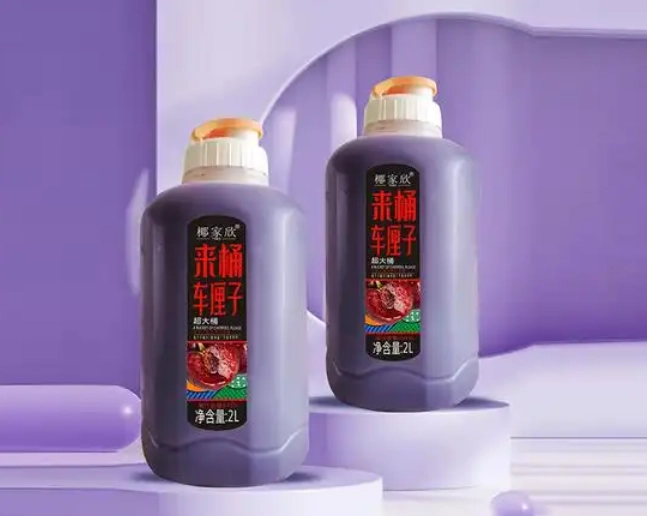
Recently, the media exposed the "multiple NFC juice production workshops in Henan with no fruit at all" incident, dragging the shady practices behind drinks labeled "fresh-squeezed, 100% pure" into the daylight. At the named Henan Ai Qizao Food Co., Ltd., not a single piece of fresh fruit could be found in the production workshop, and even the most basic cleaning and cold-press physical equipment were completely absent. The so-called "authentic fresh-squeezed" juice was essentially a visual illusion of secondary industrial blending performed in the workshop using nothing but water and large barrels of concentrated base pulp.
Large numbers of young consumers, accustomed to scrutinizing "0 additive" labels in front of convenience store shelves and willing to pay hefty premiums for health-oriented concepts, tend to downplay this egregious behavior as a routine case of false advertising or a minor oversight in food safety. This superficial understanding seriously underestimates the extreme "concept arbitrage" and survival-driven tactics that small micro-contract manufacturers in lower-tier markets resort to when squeezed by industry giants and burdened by soaring raw material costs.
The fruitless workshop online is merely a facade. To see the real survival struggle behind that 1 million yuan in capital, one must use Tianyancha to dig through the business and judicial skeleton of this "NFC deadbeat."
Tianyancha Deep Dive: 1 Million in Capital and Judicial Baggage
Tianyancha App business registration data shows that Henan Ai Qizao Food Co., Ltd. was established in May 2016 with a registered capital of just 1 million RMB. Its registered business scope in the Tianyancha system lists beverage production, food production, and food sales as interconnected activities, appearing at first glance to be a run-of-the-mill regional food processing specimen. However, tracing vertically through its judicial risk pipeline in the Tianyancha system reveals an even more devastating picture of credit collapse and historical baggage laid bare in full.
Tianyancha legal litigation records clearly document that this micro-entity, which plays chemical tricks in its workshop, has long been a repeat offender in legal disputes. It was previously sued for trademark infringement by industry giant Master Kong Beverage Investment (China) Co., Ltd. over imitation and edge-case violations. By April 2026, Master Kong applied for enforcement of the judgment, with the enforcement amount set at a highly precise 419,500 yuan. Due to chronic liquidity drain and stubborn resistance, the company was formally listed as a judgment debtor (commonly known as a "deadbeat") and subjected to high-consumption restrictions in June of this year.
This trajectory—from the food safety murk of a "fruitless workshop" to the frequently flashing red lights of "judgment debtor, consumption restrictions, and compulsory enforcement" in Tianyancha—bluntly reveals the inevitable endgame for such low-tier, substandard production capacity caught in the dual wringer of industry upgrading and the iron fist of the judicial system.
The "Asset-Heavy" Nature of NFC and the Survival Calculus of Micro-Contract Manufacturers
NFC juice is fundamentally an "asset-heavy, slow-margin business" that relies heavily on upstream cold-chain logistics, highly precise temperature-controlled storage, and rigid physical equipment. A micro-factory with a registered capital of just 1 million yuan simply lacks the financial bandwidth to support a cold-press and aseptic filling production line costing millions, let alone absorb the long-term depreciation from seasonal fluctuations in fresh fruit supply. To forcibly carve out a share of the premium health dividend in a muddy market, their most cunning and most lucrative calculation is to use large barrels of expired concentrated industrial base pulp for off-site dilution and blending, substituting the cheapest "water plus compounded additives" for expensive fresh juice.
This false myth, built on an "ingredient list padded with water," has not only been exposed under the media's spotlight but also reveals a full-scale collapse of its integrated defenses in the dense web of defendant records on Tianyancha.
The enforcement payment of over 400,000 yuan owed to Master Kong is more than enough to become the final straw crushing the already fragile balance sheet of a low-tier workshop that has long lost its ability to generate cash flow and survives on concept arbitrage. Being listed as a judgment debtor means its commercial credit in the supply chain is completely bankrupt. Whether in future bulk procurement of raw materials or downstream channel entry and settlement, this "deadbeat" shell will forcibly strip away every compliant avenue for maneuvering.
Industry Shift: Rule-of-Law Risk Control and Stock Reversal
The story of premium beverages has moved past its first half, long since abandoning the crude paradigm of blindly inventing concepts and exploiting consumer information asymmetry to reap quick FMCG profits. As food safety red lines and consumer rationality become acutely sensitive during this cycle of massive overcapacity clearance, the ultimate test of a beverage brand's survival mettle is no longer how polished the advertising copy on its packaging is, but rather the cleanliness of its underlying production workshop and the regulatory compliance integrity of its entity record on Tianyancha.
The deadbeat stamp Ai Qizao has left on Tianyancha is a jarring signal of the industry's shifting gears: in the latter half of the consumer goods civil war, anyone who continues to try to monopolize the entire industry's health dividend with cold industrial blending will see any warm facade built on false discourse smashed mercilessly into the abyss of destruction by the highly vigilant rule-of-law risk control and stock reversal.