Upstream Supply Chain Violations, Downstream Store Fraud: 1 Dian Dian's Quality Control Completely Out of Control
1 Dian Dian milk tea was exposed for store staff altering expiration labels and using expired ingredients, revealing a loss of control in supply chain management and the collapse of trust in the franchise model.
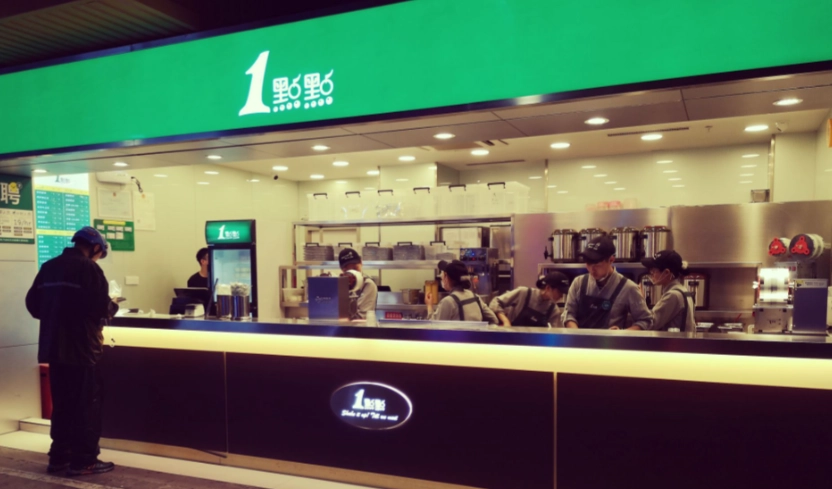
The pioneer of the first-generation台式 milk tea giants is paying a heavy reputational price for its loose supply chain management. Recently, "1点点" milk tea was exposed by the media for severe issues such as some stores arbitrarily altering ingredient expiration date labels and continuing to use overnight expired ingredients. The brand quickly issued an apology and rectification statement. This food safety scandal has not only pushed this longstanding tea beverage brand into the public opinion spotlight but has also torn open the industry's dark underbelly, where ready-made tea businesses, amid fierce market competition, resort to trampling on bottom-line rules to squeeze out profits.
Many ordinary consumers accustomed to frequent purchases on city streets tend to attribute this incident to the moral decline of individual franchise store managers. This simplistic logic completely underestimates the deep management collapse currently facing the tea beverage sector, compounded by price wars and the shrinking survival cycle of franchisees.
To see through the profit chain that has led 1点点 from its former queue-myth days to today's expiration date fraud, one must use Tianyancha to penetrate its underlying corporate structure.
The core entity controlling thousands of stores nationwide—Shenggen Catering Management (Shanghai) Co., Ltd.—was established in August 2011 with a registered capital of 8 million RMB. Its legal representative is Lou Gengshen, and it is wholly owned by the foreign entity EAGLE INFRASTRUCTURE FUND LIMITED. According to legal proceedings and risk information disclosed by Tianyancha, the company has been embroiled in multiple lawsuits over the years involving catering service contract disputes and labor contract disputes. More striking, however, is its outward investment landscape: among the 11 companies invested in by Shenggen Catering, Donghai County Yuanhua Food Co., Ltd., located upstream in the supply chain, has previously appeared in official random inspections with a history of being "ordered to rectify" by regulatory authorities.
From the upstream food factory being ordered to rectify to downstream franchise stores collectively altering expiration date labels, these risk traces scattered across the Tianyancha system paint a causal roadmap of the brand's overall loss of control.
Ready-made tea is a highly refined business that relies heavily on optimal turnover and freshness. In the current stagnant growth cycle where low-price algorithms like 9.9 yuan and 8.8 yuan have stripped industry gross margins, traditional brands like 1点点, which follow the high-concentration, heavy creamer route, face survival anxiety as new players siphon away customer traffic. To maintain headquarters' easy profits, brands often shift raw material procurement costs and inventory loss pressures entirely onto downstream franchisees.
When a franchise store's daily table turnover rate and revenue cannot cover high rent and labor costs, the most direct and covert "profit-squeezing" method for store managers to offset systemic financial losses is to target short-shelf-life ingredients, tea broths, and dairy products. Altering expiration date labels and reusing overnight ingredients are primarily driven by the need to forcibly reduce waste rates. Meanwhile, the headquarters' so-called "supervision system," faced with a vast network of franchise outlets with diverging interests, ultimately collapses due to insufficient management bandwidth or even turns a blind eye to maintain store opening rates, becoming a mere formality for inspections.
While the 8 million RMB registered capital may have supported 1点点's early expansion myth, the durability of a company ultimately depends on its rigid, underlying respect for every tea leaf and every label.
As consumers show zero tolerance for food safety and industry regulations intensify with high-frequency inspections, the suspected violations in 1点点's upstream supply chain and the downstream stores' expiration date label controversies together sound a clear death knell. This indicates that the loose franchise model—built on high franchise fees, profiting from selling raw materials, while completely offloading quality control risks onto terminal stores—has entered its most brutal period of credit bankruptcy. If the brand cannot demonstrate decisive financial subsidies and supply chain restructuring in its upcoming rectification, then 1点点's apology will ultimately become its final rite of passage out of the mainstream tea beverage market.